Question: I have sun-loving, drought-resistant perennials in containers. What can I do to prolong the bloom time?
By RoyAnn Murray, Piedmont Master Gardener Intern
Whether you are adding color and interest to a balcony, patio or deck, or creating focal points in the landscape, container gardens can provide a great way to enhance outdoor spaces with beautiful blooms that come back year after year. Most perennials have relatively short bloom periods when compared to annuals. However, with some careful planning and basic maintenance, you can enjoy a longer bloom time for your container perennials.
Perennials vs Annuals
Perennials live for more than two years and may live for many years. Herbaceous perennials have leaves, stems and flowers that typically die back to the ground each year, while their underground roots, bulbs, rhizomes or other storage organs persist. Woody perennials typically have woody stems that do not die back when the plant goes dormant for the season. Perennials may take more than one year to flower and after reaching their mature size, continue to bloom and set seed for many seasons. By comparison, the entire life cycle of annuals from seed germination to seed production takes place in one growing season and then the plant dies.
Create The Optimal Container Garden Environment
Whether you are starting a new container garden or reviving your existing plants, consider the growth habits and specific needs of your container plants, as well as your style of gardening.
Gardeners often select containers based on their aesthetic appeal but the practical aspects of caring for container plants are also important.
Consider these factors when choosing your containers.
- Type of Material. Porous containers (terra cotta or coil liners) dry out quickly and require a more frequent watering schedule than some gardeners can manage. In such cases, glazed clay, ceramic, plastic or fiberglass containers could be a better choice because they retain moisture longer. Buy pots that can withstand winter cold if they will be left outside all year.
- Weight. Ceramic, clay, concrete or metal containers may be too large or unwieldy to move easily, if pots need to be shifted to a different location when trees leaf out or during extreme weather conditions. Consider using a caddy with wheels to easily move large pots.
- Size. Containers need to be large enough to accommodate the extensive root systems of mature perennials.
- Color. Dark-colored containers absorb more heat, which can cause the potting media to dry out quickly and burn plant roots. Light-colored containers should be used for potted plants put in sunny locations.
- Adequate drainage is critical to ensure that roots are not continually water-logged. Be sure that containers have drainage holes or drill holes in the container bottom.

Setting Up and Maintaining the Container Garden
Make sure that your container garden is set up to help your perennials thrive with good planting practices and maintenance of your plants throughout the year.
Potting Soil. A high quality soilless potting mix provides the nutrients that plants need for healthy root growth and are generally weed-, insect- and disease-free. It also provides enough pore space between soil particles to retain the water and oxygen in the right amounts. Potting soil can include perlite, pine bark, coarse builder’s sand, sphagnum peat moss, and vermiculite. Although not normally necessary, the mix can also be adjusted by including fine or course textured material to increase water retention or drainage capability. You can also find recommendations for Do-It-Yourself soil mixes online, including those tailored to specific plant species.
Potting Plants. When potting your plant, moisten the potting mix first, then fill the container, leaving space at the top for watering (up to 3 inches for large pots). Plant the crown of the plant (where the root meets the stem) at or just above the potting mix surface, known as the substrate-line. Planting the crown too deeply can smother and kill the plant and planting too shallow can dry out the roots, both compromising plant health and viability. For plants bought at a nursery, a good rule of thumb is to position the plant at the same level as the nursery planted it. Water the plant thoroughly.
Watering. Water is critical to a plant’s survival. Even drought-resistant plants need proper moisture to get established. Provide consistent moisture especially during the first 2 weeks and throughout the first year. Transition to less frequent but thorough, deep watering once plants are established. The best time to water is in the cooler morning hours. A good way to determine if the plant needs water is to stick your finger about 2 inches into the potting mix and if it is dry, then the plant needs water. Avoid overwatering which can lead to disease and root rot or too frequent and superficial watering which can lead to inadequate root development. Most plants need at least one inch of water per week.
Location. Place sun-loving perennials in a location where they will receive 6 or more hours of direct sun daily. Sunny locations that face south or west are recommended along with sunny spots close to heat-absorbing walls or other windbreaks. Space the plants far enough apart for good air circulation and to prevent overheating. Reposition containers to a sunnier location, if site conditions change over time.
Nutrient Management. Since commercially available potting mixes typically include fertilizer, newly planted perennials do not need additional fertilizer immediately after planting. However, the frequent watering required for containers will leach nutrients rapidly. The timing of additional fertilizer applications will depend on the type of potting mix, watering schedule and rate of growth of the container plants. Preferred formulations include controlled release, slow- release, and liquid fertilizer. Fertilizers with higher levels of potassium and phosphorus relative to nitrogen will prolong flower production. Follow the recommended fertilization schedule on the potting mix label to avoid over-fertilization.

Pruning to Prolong Perennial Blooms
In addition to proper watering and fertilization, pruning can help the gardener extend perennial bloom times. The pruning technique depends on the plant species and the desired effect.
- Deadheading Remove spent blossoms right after they fade down to the next lateral flower, bud or leaf, allowing the plant to focus on the remaining blooms or store energy for the next year. Research online for instructions for specific plants.
- Pinch Back Remove the terminal bud (growing tip) of a stem or branch and the first set of leaves, resulting in more lateral stems and allowing the plant to produce more flowers during the growing season. This technique produces a bushier plant but delays the blooming by several weeks.
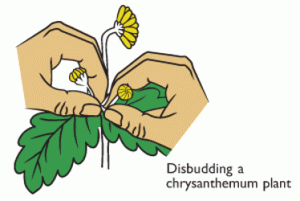
- Disbudding Remove the side or lateral buds when about the size of a pea along with any side branches, leaving only terminal bud in place. This directs the plants energy to the terminal bud, resulting in a larger than normal flower on a long stem. Another option is to remove the terminal bud which will produce more smaller lateral blooms.
- Cutting Back Cut the plant back to its new shoots or foliage or all the way to the ground after one flush of blooms. This will encourage a second round of blooms for some perennials. It can also be done to control plant height, delay bloom time, and improve overall health of the plant. Research to make sure this technique is appropriate for your specific plants.
This link provides examples of perennials that can benefit from these pruning methods.
Enhance the Beauty of the Container Garden
Plant selection is an opportunity to be creative and strategic with great reward. Pick your color palette, mix and match perennial plants with flowers and foliage of different shapes, textures and sizes. Add some winter interest. Think about using plants with staggered bloom times as another way to prolong blooms in your container. Consider including a thriller (upright showy plant) with a filler (horizontal or bush plant) and a spiller (trailing plant). There are combinations to suit anyone’s taste. Enjoy your creation and keep notes on what worked and what didn’t work well. With perennials, you can always refine your design next year.
Featured Image: Asters, University of Maryland Extension
References:
“Drought Tolerant Annuals and Perennials”, University of Massachusetts Amherst, UMass Extension, Center for Agriculture, Food, and the Environment, Greenhouse Crops and Floriculture Program, 2025.
“Growing Media (Potting Soil) for Containers” University of Maryland, University of Maryland Extension,23 March 2026.
“Outdoor Container Gardening with Flowering and Foliage Plants”, Perst, Renee et al., Rutgers, New Jersey Agriculture Experiment Station, Cooperative Extension Fact Sheet FS1215, August 2025.
“Over-Fertilization of Potted Plants”, Penn State University, Penn State Extension, 5 July 2023.
“Perennials”, University of Maryland, University of Maryland Extension, 14 August 2024.
“Perennials: Culture, Maintenance,and Propagation”, Relf, Diane, Extension Specialist, Environmental Horticulture and Ball, Elizabeth, Program Support Tecnician, Virginia Tech, Virginia Cooperative Extension, Publication 426-203, 2009.
“Perennial Garden Grooming and Maintenance Techniques” Chadwick, Pat, Piedmont Master Gardeners, The Garden Shed, Vol 10, No 5,1 May 2024.
“Plants Grown in Containers” , North Carolina State University, NC Extension, North Carolina Extension Gardener Handbook, Chapter 18, Feb 2022.
“The Art of Container Gardening”, Penn State University, Penn State Extension, 6 Aug 2025.
“Three Ways to Prune Perennials for Longer Lasting Blooms”, Flowers-Kimmerle, Nicole, University of Illinois Urbana-Champaign, Illinois Extension, 6 June 2023.