Question: I think I have compacted soil in my established vegetable garden and I have had poor harvests. What methods can be used to reduce compaction and improve the soil?
By Maria Borga, Piedmont Master Gardener
Compacted soil in vegetable gardens is a common and underestimated problem and can be a challenge for home gardeners. Compaction occurs particularly in clay-heavy soils with poor drainage or where heavy machinery or foot traffic have compressed the soil or the topsoil layers have been removed. Fortunately, several practical strategies—such as aeration, the addition of organic amendments, and the use of cover crops—can gradually restore soil structure and improve productivity. While these methods require consistency and patience, they offer sustainable solutions that enhance both soil and plant health and increase vegetable garden yields.
Understanding the Problem
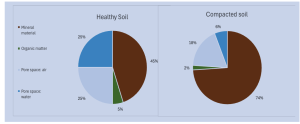
Soil is made up of solid matter and open space between soil particles, called pore space. The solid matter consists of mineral material (sand, silt and clay), and organic matter with air and water filling the open pore space. Soil in good condition consists of about 50 percent solid matter (mostly mineral material) and 50 percent open space for air and water. In compacted soil, the solid material is squeezed together so that the pore space is greatly reduced. This lack of pore space makes it difficult for plants’ roots to access the oxygen, water and nutrients they need to thrive. In addition, water cannot drain properly through compacted soil. Soil compaction also inhibits beneficial microorganisms from performing functions that contribute to soil quality and plant health.
Identifying Soil Compaction
If the soil is difficult to work with a shovel, trowel or soil probe, it is likely compacted. Other indicators of compaction include cracked and dry soil, plants with roots that grow horizontally, and plants with stunted growth or dying leaves. Standing water, water runoff, or erosion can also be caused by compaction.
When heavy compaction is suspected, a bulk-density test can provide additional information about how loosely or tightly soil particles are packed. This test compares the dry weight of the soil to its volume. Because bulk-density values associated with restricted root growth vary with soil texture, results should be interpreted according to whether the soil is sandy, loamy or clayey.
Improving compacted soil
To reduce compaction in soil, use the following three practices to increase the pore space between soil particles.
Aerate the Soil
Aeration is a process used to add air to the soil, so that air, water and nutrients can move around freely and plant roots can grow easily.
Gardeners often turn to mechanical tillers on compacted soil to produce looser, more aerated soil. However, tilling can destroy the soil structure and quality, which can actually make the soil more prone to being compacted. In addition, tilling can disturb the microbes and fungi that help maintain soil and plant health.
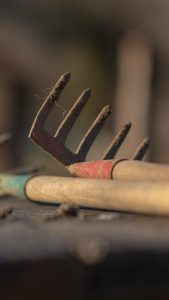
Image source:
Ciefo, Unsplash
A much better approach is to aerate compacted soil using a garden fork or broad fork to manually poke holes in the soil to a depth of four to six inches. Move the fork back and forth to open the holes without turning over the soil, remove the fork, and repeat these actions before moving to the next compacted area. This method breaks up compacted soil gently without disturbing soil layers or destroying the soil biology. It can be done successfully around growing plants, as long as garden tools don’t damage roots. While a mechanical core aerator is appropriate for aerating lawns, it is not recommended for use in established gardens because it can cause root damage, kill plants and increase soil compaction.
Don’t work the soil when it is too wet, because doing so can cause additional compaction and damage soil structure. To test soil moisture, squeeze a handful of soil. If it remains in a sticky or muddy ball, wait until it is drier. Soil that is ready to work should crumble readily when released or gently pressed.
Add organic matter
When organic matter is added to soil, it holds soil particles together forming larger soil aggregates that don’t fit tightly together and creates more open pore spaces in the soil. This improves soil structure, opening more pathways for oxygen, water and nutrients that promote root growth. Organic matter also provides food for microbes, fungi, earthworms and insects that help to aerate the soil and break down plant materials, making nutrients available to plants.
For an established vegetable garden, mature compost can be added to increase organic matter and improve soil structure. Another option for larger vegetable gardens is to add compost only when transplanting.
The amount and frequency of application should take into account existing soil organic matter and nutrient levels. Nutrients, particularly phosphorus, can accumulate beyond plant needs, and excess nutrients can be lost through runoff or leaching. Periodic soil testing can help determine whether additional compost is appropriate.
Grow cover crops
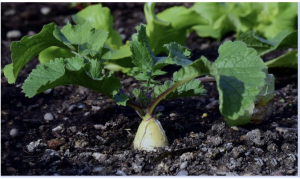
Image Source: Leopictures , Pixabay
Cover crops are planted to improve soil quality rather than for harvest. Their root systems break up and aerate compacted soil and make it easier for plants to get water and nutrients that may have been unavailable or under the compacted soil. They also stabilize the soil, reduce erosion and add organic matter to the soil.
Deep-rooted brassicas such as forage radish and rapeseed develop taproots that can create channels in the soil, although severe compaction may restrict their growth. Grasses such as cereal rye and annual ryegrass produce extensive fibrous root systems that can improve soil aggregation and structure near the surface. Using cover crops with different root types can provide complementary soil-health benefits.
In Virginia, plant winter cover crops between mid-August to mid-October, to give them time to germinate and become established before the first frost. Remove the cover crop in late April or early May before it sets seed by mowing or weed whacking, then work the residue into the soil manually or leave it on the soil surface as a mulch.
Prevent future compacted soil
Considerable time and effort are required to build healthy soil on a heavily compacted site. To prevent future soil compaction, follow the practices described above and you can also:
- Include walkways, mulch or landscape paths throughout the garden or make smaller garden beds to limit foot traffic in the garden
- Avoid working the soil when it is too wet or there is standing water
- Avoid heavy foot traffic or use of heavy equipment in the garden
- Cover the soil around your plants in the growing season
- Use compost, peat moss or leaf mold or other organic material as soil amendments, instead of sand which can harden the clay soil
- When starting a new garden, rely on mechanical tilling once, since repeated tilling can lead to compacted soil
- Consider using no-till gardening, which uses the four core principles for healthy soil: keep the soil covered all year, minimize soil disturbance, maximize growth of plant roots and plant a variety of crop species
Fall is a good time to begin to reduce soil compaction and build soil health. Begin with aeration, add some organic material, so it has time to mix with the soil before planting season and plant a winter cover crop. Remember that the process of reducing soil compaction will take several years but will result in healthy soil and better vegetable crops.
Featured Image: Dylan de Jong, Unsplash
References
“5 Considerations for Getting Started with Cover Crops”, Hilshey, Bridgett and Bench, Christian, Cover Crop Strategies, 24 Jan 2024.
“Combating Soil Compaction,” Pineo, Rebecca and Susan Barton, University of Delaware, Bulletin #124, Oct 2024.
“Cover Crops”, Campbell, Cleve, Piedmont Master Gardeners, The Garden Shed, Vol 1, No. 8, 23 Aug, 2015.
“Cover Crops to Enrich Soil: Best Bets: Plants for Particular Uses”, Master Gardeners of Northern Virginia
“Not Just for Farmers: Cover Crops”, Scheren, Janet, Fairfax Master Gardener, Fairfax County Master Gardeners
“Practical Tips for Healthy Soil in a Home Garden”, Mrazik, Thomas J., Master Gardener, Penn State Extension, Penn State University, 10 Mar 2025.
“Soil Compaction and What to Do About It”, MSU Extension, Gardening in Michigan, 29 Sept 2014.
“Soil Compaction”, Stroupe, Chris, Piedmont Master Gardeners, The Garden Shed, Vol 10, No. 1, Jan 9, 2024.
“Using Compost in Your Landscape”, Virginia Cooperative Extension, Virginia Tech and Virginia State University, Publication No. 426-704, 2021.
“What Do Microbes Do in the Soil,” Plamann, Gus, Decode 6, American Society of Agronomy, Crop Science Society of America, and Soil Science Society of America, 6 July 2023.
“What To Do About Compacted Soil”, Hudson, Hal, MSU Extension, Michigan State University,12 May 2016.
“Why Is My Garden Soil So Hard? Causes and Fixes for Compacted Soil”, Reencle