
Winter Workout for Easier Spring Gardening
As fall winds down and the last leaves have been raked, the garden is heading into its long winter rest. But your body does not have to do the same. A little consistent movement now—while the days are shorter and outdoor work is lighter—means you’ll step into early spring planting, garden bed prep, and that first compost-spreading session feeling strong, steady, and free of the common “Why does everything hurt?” chorus.
Gardening is a sneaky, full-body sport. Raking and hoeing recruit your arms, shoulders, and core. Lifting bags of soil or heavy pots calls on your leg muscles and glutes. Bending, kneeling, and rising demand flexibility and balance. Starting a short daily routine in November will give you the whole winter to continue building strength, stability, and endurance, so those first warm spring days will feel joyful instead of difficult.
Here is a simple, equipment-free (or nearly free) round of exercises you can do in 10–15 minutes. Aim to do these on most days of the week. Start gently, focus on form, and listen to your body. If you have any health concerns or don’t exercise on a daily basis, check with your doctor before getting started.
Fitness Terminology Key:
Rep (Repetition): Doing one single motion of an exercise.
Set: Repeating that same single exercise a set number of times before a rest.
Round: Moving through a whole group or circuit of different exercises back-to-back before you take a real rest.
Soft knee: Keeping a slight bend in the knee during exercise.
Muscle Diagrams
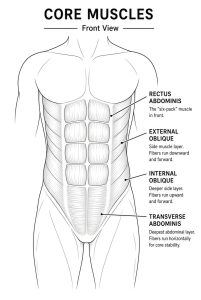
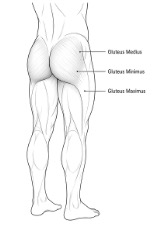
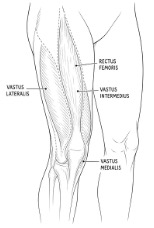
Chair Squats (Leg & Glutes, Core)
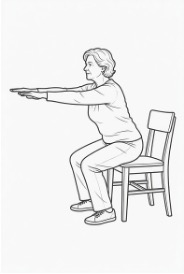
Garden payoff: Getting up and down while planting, weeding, or lifting bags of soil and compost.
Stand in front of a sturdy chair with feet about shoulder-width apart. Arms can reach forward for balance. Slowly bend your knees and hips as if sitting back into the chair—lightly touch the seat if you like, then stand back up using your legs (not momentum). Keep your chest lifted and knees tracking over your toes. Do 2–3 sets of 8–12 slow repetitions.
Wall Push-Ups (Chest, Shoulders, Arms, Core)
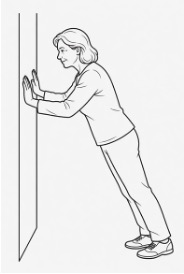
Garden payoff: Pushing a wheelbarrow, raking, hoeing, and any forward-pressing or tool-pushing work.
Stand facing a wall, place hands on the wall at shoulder-height and a little wider than shoulder-width. Step your feet back, so your body forms a straight line from head to heels. Bend your elbows to lower your chest toward the wall, then press back to the start. Keep your core gently engaged, so your hips don’t sag or pike. Do 2–3 sets of 8–15 reps. Try moving your feet farther from the wall to make it harder.
Wall Plank (Core, Shoulders, Stability)
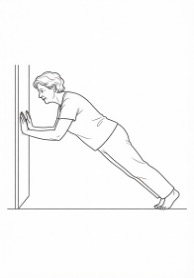
Garden payoff: Holding steady while hoeing, raking long garden beds, or working in a bent-over position without complaints from your lower back.
Stand facing a wall and place your forearms (or hands) on the wall at shoulder height. Walk your feet back until your body forms a long, straight line from head to heels. Brace your core, as if gently drawing your belly button toward your spine and keep your hips from sagging or sticking out. Hold the position while breathing steadily. Do 2–3 holds of 15–40 seconds. Try stepping farther from the wall to increase the challenge
Standing Single-Arm Row (Back stability – Latissimus Dorsi)
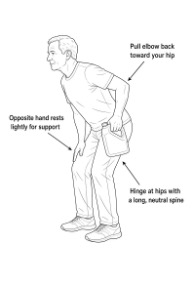
Garden payoff: Strengthens the pulling muscles used when raking, pulling weeds, dragging hoses, or lifting and carrying bags or pots from the ground or vehicle.
Stand with feet about hip-width apart, knees soft. Hold a light weight (water jug, dumbbell, or even a full watering can) in one hand. Hinge slightly at the hips so your torso is angled forward, keeping your back long and core gently braced. Let the weighted arm hang straight down. Then pull the elbow back and up toward your hip, squeezing the side of your back (the lat). Pause briefly at the top, then slowly lower. Keep the movement controlled—no swinging.
Do: 8–12 slow reps on each side, 2 sets.
You can also do this with a resistance band anchored low and while seated.
Standing Bird-Dog (Core, Balance, Back Stability)
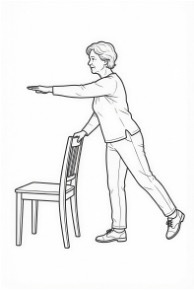
Garden payoff: Reaching, twisting lightly, and staying steady on uneven ground or when one hand is busy with a tool.
Stand behind a sturdy chair and lightly hold the backrest for support. Shift your weight onto one leg. Slowly reach the opposite arm forward while extending the free leg straight behind you (like a standing version of the classic bird-dog). Keep your hips level and your torso steady—no big twists or arches. Pause briefly, then return with control and switch sides. Do 8–10 slow, controlled reps per side. An alternative is lifting the opposing leg and arm.
Single-Leg Balance (Ankles, Core, Overall Stability)
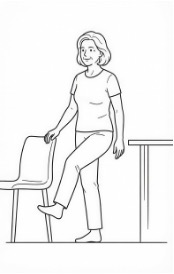
Garden payoff: Navigating soft soil, slopes, or awkward positions without tipping over while carrying tools or produce.
Stand near a counter or chair for light fingertip support, if needed. Lift one foot slightly off the floor and balance. Keep a soft knee on the standing leg and your core lightly engaged. Progress by closing your eyes or moving your free leg slowly. Hold 20–40 seconds per side for 2 sets.
Finger Spreads & Squeezes (fingers, wrists, and forearms)
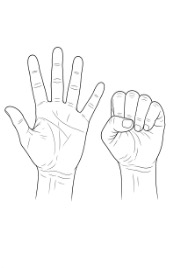
Garden payoff: Builds grip strength and finger endurance for holding pruners, trowels, rakes, and hoses, and helps reduce hand fatigue and stiffness from repetitive weeding, seeding, and tool use.
Sit or stand comfortably.
- Make a gentle fist and squeeze a soft ball, rolled-up washcloth, or your own hand for 3–5 seconds.
- Then open the hand fully and spread the fingers as wide as possible for 3–5 seconds.
- Repeat the squeeze-and-spread pattern.
Do both hands. You can also place a rubber band around the fingers (outside the fingertips) and open against the band for extra extension work. Do 10–15 slow repetitions per hand for 1–2 sets.
For all exercises, it’s best to start with one round 3 times per week for several weeks, then add additional sets of specific exercises based on your preferences and fitness needs.
Bonus Everyday Habits
– Walk 20–30 minutes on most days for heart health and endurance; those long spring gardening sessions will feel easier.
– Practice the “hip hinge” whenever you pick something up by bending at the hips and knees with a long, neutral spine. Your back will thank you all season.
– Add gentle wrist circles, shoulder rolls, and hamstring/quadricep stretches after your strength work or at the end of the day.
Consistency beats intensity. Ten focused minutes on most days through the winter will make you stronger, more stable, and more resilient when the soil is finally ready for gardening. Then you can spend your energy on the fun activities—watching seedlings push upward, sharing extra harvest goodies with neighbors, and reveling in the satisfaction of a well-tended plot—rather than recovering from preventable aches.
Remember, always consult your healthcare provider before beginning a new exercise routine, especially if you have existing joint, back, or balance concerns.
Here’s to a strong, injury-free spring. Your physical body (and your future as a gardener) will be cheering you on from the compost pile! Happy training!
SOURCES:
Featured image and all drawings by Janet Chisholm
For more information on preparing your body for gardening and reducing risk of injury, explore these online resources:
- Mississippi State University Extension. Getting In Shape to Garden (Publication P4078).
- Skagit County Master Gardener Foundation / Washington State University Extension. Gardening Fitness.
- Iowa State University Extension and Outreach. Tips for Preventing Gardening Injuries.
- Harvard Health Publishing. Gardening and yard work: Exercise with a purpose.
- Washington State University Extension. Gardening Fitness (PDF summary of practical exercises).