While environmental damage from sources like auto emissions, chemical uses, habitat destruction and plastics are highly publicized and well known to the public, light pollution is less publicized, acknowledged and understood. Light pollution refers to the overuse, misdirection, excessive brightness and color of the use of light at night by streetlamps, parking lots, shopping mall lighting, illuminated sign boards, neon signs and home and business external lighting. Its impacts range from reducing the visibility of the night sky, affecting human enjoyment and investigative science, to possible impacts on human health like reducing natural melatonin production, affecting sleep and other bodily functions, to affecting wildlife, mainly nocturnal life, whose circadian or day/night behaviors are affected by the unnatural light at night. In addition, it is estimated that about 60% of outdoor light at night is unnecessary, wasting significant amounts of energy. It is wise to be mindful of all the issues, but this article will focus on the impacts on wildlife and and related environmental impacts caused by misdirected and overuse-based light issues in homes and neighborhoods.
Local Impacts
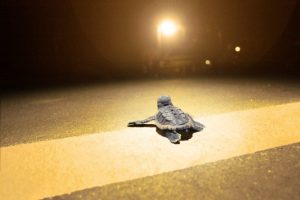
Much of life, including insects, birds, animals and humans, form their habits and routines, i.e. their circadian rhythms, via nature’s day/night patterns. Artificial light, improperly managed, can harmfully affect these patterns. An example, admittedly distant from the homeowner focus of this article, is just-hatched sea turtles. Their instinct is to move toward light after birth, typically moonlight reflecting on the water. Coastal city lights can confuse hatchlings and cause them to head inland rather than to the water, leading to dehydration and vulnerability to predators. Large scale deaths have been documented in many coastal areas. Similar issues have arisen affecting birds, insects and other animals. For instance, about 70% of birds migrate and 80% of migrators migrate at night. They can become disoriented by light from windows, security lighting, streetlights, and home outdoor lamps. This leads to millions of bird deaths each year due to building collisions, exhaustion and predation. Similarly, natural pollinators including moths and insects, can be drawn to bright light at night. Night feeders can be distracted by the lights, reducing their feeding and mating time while tiring them and making them vulnerable to predators. While not the only cause, light pollution has played a role in the dramatic reduction in insect populations and diversity worldwide, leading to the coining of the term “insect apocalypse”. The impacts are easily seen by observing lightning bugs in the summer. Woods that were alight in fireflies decades ago now show greatly reduced populations. Besides being fun to observe, firefly larvae prey on a variety of pests, adults are helpful pollinators and they provide food for bird populations. Their decline is representative of overall insect and bird population declines worldwide.

What can we do to minimize the damage?
Reducing light pollution isn’t complicated, but it does require specific actions, whether we are talking about our homes, neighborhoods, communities or cities. Getting our home lighting right is a good first step to legitimize supporting change in the other settings, so let’s start there. Steps we can take include:
- Keep lights, especially outdoor lights, off at night unless they are truly needed.
- In the house, close window shades to avoid lighting windows and potentially attracting birds and insects.
- Use only shielded outdoor light fixtures that direct light groundward (see photo above).
- Use warm toned bulbs, amber or yellow, not bright white, blue or UV, which attract more wildlife. Look for the “bug light” label when buying bulbs.
- Use timed or motion activated lights which turn on only when needed.
- Use bulbs that provide the least light needed to fulfill the particular need.
Choosing Bulbs

In addition to directing light to areas where it is needed, choosing the lowest brightness and warmest appearance of the light produced is the goal. Bulbs have two basic indicators that should be considered when buying and installing them in outdoor lighting:
- Lumens, which refer to the brightness of the bulbs. Environmentally, the lower the brightness the better. The range of lumens runs from 50 to 2400. 100 to 300 Lumens is a typically acceptable range for general outdoor use.
- Light appearance, measured in Kelvin (K). Typical bulb Kelvin ranges run from 2700 to 6000K. 3000K and below provides the desired warmer white/yellow light recommended for the calmest, least environmentally disruptive outdoor lighting. As the Kelvin values increase, their light gets purer and cleaner, making it more disruptive for vulnerable wildlife at night.

- Note that the bulb pack in the photo above claims a brightness of 380 lumens and a rating of 2790 Kelvin. The brightness choice is a function of the need filled by the light. Using the lowest brightness that can do the job is the goal. The Kelvin, or appearance level, is best kept below 3000 to minimize environmental impacts.
Recommendations and Wrap Up
While light pollution may not be a front of mind environmental issue for many of us, its range of social and environmental impacts are significant and are important to recognize and address. This article presents some of the basic issues and actions that we individuals can take to reduce the negative effects while maintaining the necessary uses of light in our everyday lives. Improving our personal light use is a good first step but working to influence responsible light use beyond our personal property is certainly warranted. A helpful source to learn more about the issue of light pollution is available from DarkSky.Org, a world-wide group that is focused on the light pollution issue. I recommend taking a look.
While Albemarle County is not out front on the light pollution issue, managing light pollution is a part of the County’s “Comprehensive Plan” that focuses on a range of environmental improvements and protection. Within the state of Virginia, Fairfax County is further along in actively encouraging community members to engage in addressing light pollution. Their work is worth reviewing. Over 90% of the American and European populations are living under sky glow and the well documented reduction of bird, insect and other animal populations. It is important for us to take action personally and more broadly to prevent further damage to our local and worldwide light pollution related issues. I hope that the information contained herein motivates readers to join the movement.
Sources: Light Pollution: The Overuse & Misuse of Artificial Light at Night – JMU, James Madison University
Light Pollution | Oklahoma State University Light Pollution, National Geographic
Light Pollution | Learn | Colorado Plateau Dark Sky Cooperative | USU, Utah State University.
How to dim the consequences of global light pollution | UCLA, University of California Los Angeles.
Light Pollution – IDAstro, Boise State University
Dark Sky International | Protecting the night skies for present and future generations, Dark Sky International Lead photo: Bad to Good Night Lights: Dark Sky International
Light Pollution – Firefly Conservation & Research, Firefly.org
The Insect Apocalypse: Why Entomologists Need Your Help, University of Florida