October signals the beginning of the end of our outdoor vegetable and fruit growing season. It’s the last chance to plant a few short cycle cool weather vegetables, harvest temperature sensitive produce before our first frost, document the gardening year, clean up the beds, and prepare beds for winter. Let’s dig into the possibilities.
Planting
If you planted crops for fall harvest in August or September, you may already be harvesting fast-maturing plants like some lettuces and radishes. According to the VCE Home Garden Vegetable Planting Guide, those of us in Hardiness Zone 7b are still able to plant baby lettuces, radishes, mustard, and spinach during the first part of October. With an average first frost date of October 25th-November 5th, late planters have the possibility of another cool weather crop before winter.
October is the recommended time to plant garlic. Giving the cloves 3 or 4 weeks to take root, but not enough time to sprout above ground before frost, is the goal. Good guidance is available in the article Planting Garlic in the Fall from the Rutgers University Extension.
Frost preparation:
Watch the two-week forecast and plan to protect any sensitive crops ahead of predicted frosts to maximize your harvest.
To get a better understanding of frost damage and vegetables that are susceptible to light, medium and hard frost exposure, refer to the excellent article Identifying and Preventing Freeze Damage in Vegetables from the Michigan State University Extension.
To protect plants further into the fall and winter, there are a couple of options:
- Wet your soil: there is some evidence that watering ahead of a frost will keep the air temperature just above the soil as much as 5 degrees warmer than dry soil and will maintain the differential overnight.
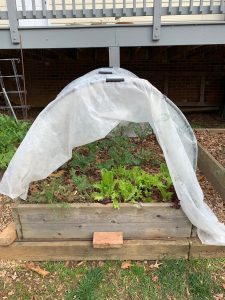
- Cover your plants: For better protection, cover the crops that aren’t cold hardy. Spun polyester row cover fabric is a proven choice, although gardeners use everything from newspapers to buckets to commercially available water-jacketed individual plant covers. Fabric cover protection varies from 2 to 6 degrees Fahrenheit depending on soil conditions and fabric used. Air space between cover and plants increases the protection over that obtained by simply laying the cover directly on the vegetation. Spun fabric covers let light and water through and can be left in place. Most other options need to be removed during the day after the temperature is above freezing. For more information on row covers please check out the article: Row Covers from the University of Maryland Extension.
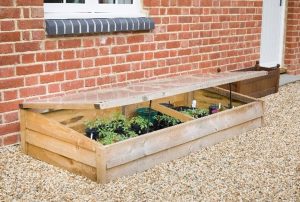
- Cold Frames: Cold frames provide a more permanent way to combat both spring and fall frosts. Tips on construction and on using cold frames are available in the Colorado State Extension article Extending the Season with Cold Frames.
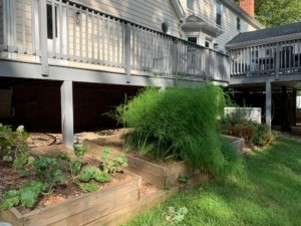
- After frost, cut back asparagus foliage to within 2 inches of the ground.
- If you haven’t done a soil test in a few years, fall is a good time to get one. Organic amendments added in the fall per soil test guidance will be ready for plant uptake in the spring. In the Charlottesville/Albemarle area, test kits and instructions are available at the Extension Office in the County Building off 5th St. Extended.
- There is still time to plant a cover crop. Cover crops protect the soil over the winter, store unused nutrients to prevent them from leaching, and provide organic matter in the spring when tilled under, used as mulch or composted. It is late to plant a mixed crop but Winter Rye is a possible late season solution that adds organic matter and helps break up compacted soil. The article Cover Crops from the University of Maryland Extension provides guidance.
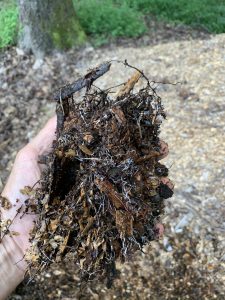
- If you aren’t planting a cover crop, protect the garden soil with a few inches of chopped leaves, aged wood chips, or straw. Mulch reduces nutrient leaching and carbon loss while moderating temperature variation and adding organic matter.
- If you haven’t kept up with garden documentation this year, this is your last chance. It’s a good idea to diagram the garden along with specific crop locations to guide crop rotation next year. Crop rotation is an important organic tool for minimizing passing insect and disease problems from one season to the next.
- Vegetable crops in the same botanical family are often susceptible to the same diseases and insects. For crop rotation to be effective, gardeners should not plant vegetables belonging to the same family in the same location for at least three years. Crop rotation in a small garden may be difficult. However, we should rotate our vegetable crops as best we can. You can find an informative listing of plant families in the Penn State Extension article Plant Rotation in the Garden Based on Plant Families.
- Preserve any herbs that are still growing prior to the cold weather arriving. Good “how to” advice is available from the article Harvesting and Preserving Herbs, from the U of Maryland Extension.
Guidance for Fruit Growers
-
- Protect strawberry plants over winter by weeding the beds and applying mulch after plants have entered dormancy and soil temperatures have dropped below about 50°F. Chopped leaves and straw are good mulches in Zone 7b. Excellent guidance for managing a variety of fruits is available in VCE publication Small Fruit in the Home Garden. Detailed frost guidance for strawberries and other berries is found in the article Freeze and Frost Damage on Berry Crops from the Penn State Extension.
- Fall can be a good time to plant certain fruit trees. For guidance for a variety of fruits refer to VCE publications Tree Fruit in the Home Garden and Growing Peaches and Nectarines in Virginia.
- Pick up dropped fruit from under existing fruit trees so that deer and rodents will not be attracted to the fruit or your growing tree. Raking and disposing of diseased leaves will help keep insects and diseases under control next season.
- High grass and mulch are a haven for rodents whose gnawing can severely damage trunks. Keep the grass mowed around fruit trees. Mulch recommendations vary by fruit species. Follow current VCE guidance for the tree being planted or maintained; organic mulch is not recommended around apple trees, and some VCE fruit-tree guidance recommends removing mulch in the fall.
Ok, got everything taken care of? Relax. You’ve earned it. Hoping for a more leisurely visit with you next month at The Garden Shed.
Additional Sources:
October Tips: Fruit and Nuts, VA Cooperative Extension: https://albemarle.ext.vt.edu/content/dam/albemarle_ext_vt_edu/files/hort-tip-sheets/10-14-fruit-nuts.pdf
Garlic Production for the Gardener, UGA Extension, https://extension.uga.edu/publications/detail.html?number=C854&title=Garlic%20Production%20for%20the%20Gardener
Lead photo: Fall edible garden. Photo: R Morini