Invasive Plants that Can Be Controlled in Winter
Quite a few invasive plants can be effectively controlled in winter, including:
—Asiatic or Oriental Bittersweet (Celastrus orbiculatus) is easy to spot in winter due to its brightly- colored berries. For help with identification, take a look at this video: “invasive Alert: Asiatic Bittersweet/www.youtube.com. Use the cut-stump method in winter. For detailed guidance on this and other control methods, see blueridgeprism.org/Control Methods
—Autumn Olive (Elaeagnus umbellata): Use the cut stump method in winter and immediately apply herbicide. For detailed guidance, watch this video: Controlling Autumn Olive/ www.youtube.com
—Callery or Bradford Pear (Pyrus calleryana ‘Bradford’) can be treated from fall into early winter by using the cut-stump method. According to the Blue Ridge PRISM,
Spring is a good time to identify Callery pear but is not the best time to chemically control it. Because the tree’s sap is still rising, herbicides will not be effective. The best time to control Callery pear is from June (after the tree has fully leafed out) through February. To ensure long-term control of Callery pear and its cultivars, monitor treated sites for several years for seedlings and regrowth from roots.
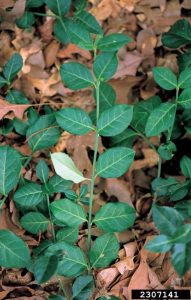
Winter is also a very good time to attack English ivy (Hedera helix) as well as winter creeper (Euonymus fortunei), a similar evergreen vine that is similarly destructive when it climbs trees. English ivy can climb as high as 90 feet, and “the weight of the ivy vines and foliage, especially when laden with snow, ice, or rain – causes invaded trees to be highly susceptible to blowing over during storms. Dense vines trap moisture, which encourages trunk rot and harbors the pathogen for bacterial leaf scorch, which infects oaks, elms, and maples.” English Ivy and Winter Creeper/Blue Ridge Prism Fact Sheets. Use the cut-stump method, being careful not to harm the tree. Before you begin, be sure to read this Garden Shed article: How to Remove English Ivy from Trees, which will provide you with excellent guidance.
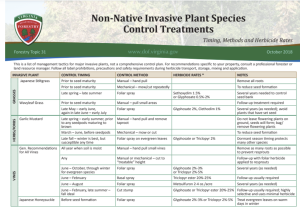
If you are using a herbicide treatment, be sure to consult this extensive chart prepared by the Va. Dept. of Forestry, which will guide you in choosing the correct herbicide and timing for the particular plant in question: Non-Native Invasive Plant Species Control Treatments: Timing, Methods and Herbicide Rates. And be sure to read the herbicide label carefully and wear protective equipment.
—————————————————————————————————————————
PESTICIDE WARNING
Pesticides (which include herbicides, insecticides, rodenticides, etc.) are poisonous. Always read and carefully follow all precautions and safety recommendations given on the container label. Store all chemicals in the original labeled containers in a locked cabinet or shed, away from food or feeds, and out of the reach of children, unauthorized persons, pets, and livestock. Consult the pesticide label to determine active ingredients, signal words, and proper protective equipment. Pesticides applied in your home and landscape can move and contaminate creeks, lakes, and rivers. Confine chemicals to the property being treated and never allow them to get into drains or creeks. Avoid drift onto neighboring properties and untargeted areas.
—————————————————————————————————————————