To help our gardens survive these growing conditions, we need to:
- Understand how plants respond to heat stress
- Identify the signs and symptoms of heat stress on plants
- Mitigate the effects of heat stress on plants
- Develop a plan for helping plants cope in future years
HOW PLANTS RESPOND TO HEAT STRESS
Under normal growing conditions, plants pull water from the soil up through their roots and stems and into their leaves where it converts to vapor. The vapor is released from the leaves into the atmosphere through specialized microscopic pores called stomata. This process of releasing water vapor is known as transpiration and is how plants cool themselves.
Heat stress occurs when water vapor is released faster than roots can absorb water from the soil. To compensate for the water loss, leaves close their stomata. When this happens, the leaves overheat, which can cause tissue damage.
Plants respond differently to heat stress depending on a variety of factors:
- Root structure – Plants with shallow roots dry out faster than those with long tap roots, which penetrate deep into the soil to access water. Also, some plant species with roots that are colonized by mycorrhizal fungi can access moisture in the soil at greater depths, which is beneficial during prolonged heat and drought conditions.
- Plant maturity – An older plant with a well-established fibrous root system is better equipped to access moisture in the soil than a younger plant or a recent transplant with a small or limited network of roots.
- The plant species or cultivar – Some plants cope well with high heat due to unique botanical features such as felted (furry or hairy) leaves that shade the leaf surface, silvery color leaves that reflect sunlight, thick or wax-coated leaves that hold in water as well as reflect sunlight, or, as mentioned above, extensive fibrous root systems or deep taproots that can penetrate deep into the soil in search of moisture.
- Plant health – An unhealthy plant that is already stressed by disease or insect damage is less able to deal with heat stress than a strong, healthy plant.
- Mulch protection – During a heat wave, bare soil tends to dry out rapidly and become very hot, creating hostile growing conditions for plants. A layer of mulch benefits plants by cooling the soil and holding in moisture around the roots.
- Density of nearby plants – The foliage on densely planted perennials and annuals shades the soil helping to keep it cooler during the day. In addition, well positioned shrubs and trees can provide cooling shade for one another as well as for other nearby plants.
- Amount and strength of sunlight throughout the day – Sunlight is strongest in the afternoon. Plants that grow in full sun in the morning but are shaded in the afternoon tend to tolerate heat stress better than plants that receive sunlight in the afternoons when it is at its strongest.
- Nighttime temperatures – Heat-stressed plants stand a better change of reviving if nighttime temperatures are cooler. But if high heat continues into the night, plants don’t have the opportunity to revive.
- Windy conditions – Hot, drying winds exacerbate the effects of high heat further stressing plants.
SIGNS AND SYMPTOMS OF HEAT STRESS
Heat stress affects plants at the cellular level and the tissue damage may not be obvious to the casual observer. Some outward signs of heat stress that are clearly visible include the following:
Wilting – This typically occurs during the hottest part of the day to many ornamental plants and vegetables. Lack of moisture reduces the water pressure within a plant’s leaves and stems causing them to become limp or droop. Wilted plants typically recover at night when temperatures cool down. However, the longer a plant stays wilted, the greater the potential for permanent damage at the cellular level.
Leaf Rolling and Cupping – When faced with intense heat, some plants roll or cup their leaves in response and close their stomata. This strategy minimizes the leaf surface area exposed to the sun and reduces the loss of moisture within the plant.
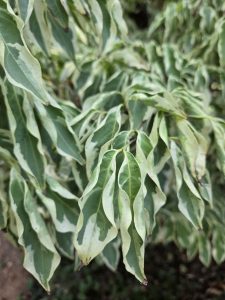
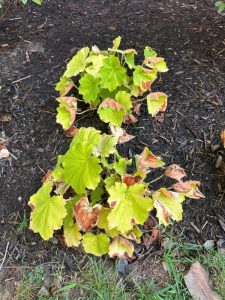
Dry leaf margins – As leaves lose moisture, heat stress can cause the margins of the leaves to dry up and turn brown or yellow. While the outer portion of the leaf is sacrificed, particularly on plants with large leaves, the rest of the leaf is potentially still functional and able to photosynthesize to some degree.
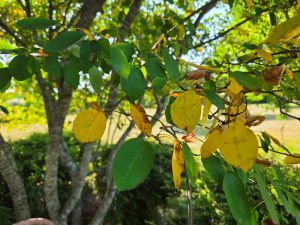
Defoliation – Some tree and shrub species react to heat stress by shedding foliage. Often, leaf drop occurs with older leaves at the bottom of the plant or within the branches close to the trunk.
Stunted Growth – Because stressed plants are unable to take up nutrients from the soil and photosynthesize, they may cease growing.
Sunscald – This symptom appears in the leaves of some ornamental plants as a large white or yellow lesion, which may eventually turn brown or shrivel. Sunscald can occur in some fruits and vegetables as well. In tomatoes and peppers, for example, it occurs as a white area on the side of the fruit exposed to intense sunlight. This often happens when foliage is either sparse or removed, suddenly exposing the underlying fruit to intense sunlight. Unfortunately, the affected area can then become subject to bacterial, fungal or insect damage.
Blossom and Fruit drop – To conserve energy during extended periods of high temperatures, some plants may shed their unopened flower buds and blossoms or produce fewer blossoms. Vegetables such as tomatoes and squashes may shed both blossoms and undeveloped fruits.
Bolting – Some plants, such as spinach or lettuce, may send up a flower stalk prematurely as a means of setting seed quickly.
WAYS TO MITIGATE THE EFFECTS OF HEAT STRESS ON PLANTS
In the absence of rain, provide supplemental water to help plants affected by heat stress. To minimize loss of moisture from evaporation, water plants early in the morning before the heat of the day sets in or late in the evening when temperatures are cooler. If you water in the evening, wet the soil and not the foliage. Otherwise, damp foliage may invite fungal diseases such as mildew and mold. Water slowly and deeply so that the moisture penetrates down to the root level. Pay attention to the moisture needs of any young trees or shrubs planted within the past couple of years. They will benefit from extra water while they are still establishing their root systems. While most vegetables need consistent moisture for peak performance, don’t overwater them.
Apply two or three inches of organic mulch around the base of plants. This will shade the soil keeping it cooler and hold in moisture by reducing evaporation.
Provide temporary shade during hours of peak heat. Use shade cloth to protect selected landscape plants or vegetables from intense sunlight and heat. If you don’t have shade cloth, get creative and use an old bed sheet instead. As another suggestion, prop a piece of cardboard at an angle over (but not touching) a plant. Re-purpose an old umbrella as temporary shade. Once the high heat conditions abate, remove the shade cloth or other temporary shade so that the plants can photosynthesize in full sun. If you have plants in pots, move the pots to a shaded area for the duration of the heat wave.
Keep weeds under control. Unfortunately, weeding is never a “one and done” activity. They are better adapted to extreme heat than most ornamental plants and can outcompete them for moisture and nutrients. While a layer of mulch will help control weeds, it’s still wise to monitor landscape beds and vegetable gardens for them on an ongoing basis and remove them while they are small.
Avoid fertilizing during heat waves. Plants affected by heat stress cannot take up nutrients from fertilizer, especially if the soil is dry.
Avoid using herbicides during heat waves. When temperatures reach 85°F or more, a plant’s metabolic processes may either slow down or shut down completely. Since the plant is not actively growing, it may exhibit a reduced herbicide response. Also, high heat may cause some liquid herbicides to convert to a gaseous form. If that happens, the herbicide may drift onto desirable plants. Always check the label on herbicide containers to make sure the product is safe to apply during a heat wave.
Postpone dividing or transplanting plants during a heat wave. The act of dividing a plant stresses it and the added stress of high air and soil temperatures can be too much for the plant to tolerate. If possible, wait until either spring or fall when temperatures are more moderate and moisture is more readily available.
Remove (deadhead) spent flowers from plants affected by heat stress. This prevents the plant from expending its energy on producing seeds or fruits. Deadheading also makes the plant look a lot tidier, which helps improve the appearance of your landscape.
Avoid pruning during a drought or heat wave. Pruning can stimulate new growth, which the stressed plant may not be able to support. On trees and shrubs, removal of a branch can potentially expose previously shaded lower branches to bright sunlight resulting in sun scald.
HOW TO HELP PLANTS COPE WITH HEAT STRESS IN FUTURE YEARS
Some additional steps we can take to help our landscape plants and vegetable gardens thrive during future heatwaves include the following:
Amend soil with compost to improve soil texture and to help hold moisture.
Choose heat-loving plants that thrive in hot climatic conditions. When choosing plants for sunny locations, make sure their requirements for water and sunlight match the site conditions. For example, don’t put a plant that prefers shade and moist soil in a hot, dry site subject to strong afternoon sunlight.
Incorporate ground covers in landscape beds as a living mulch to shade the soil under taller plants and help hold in moisture.
Choose vegetable varieties that thrive in high heat. Squashes and peppers, for example, tend to be tolerant of high heat, whereas lettuce and broccoli tend to bolt quickly. Look for heat-tolerant vegetables and cultivars that can thrive in stressful growing conditions. A lot of research is being done to develop cultivars with a higher tolerance to heat stress.
Consider installing a drip or soaker hose irrigation system to deliver water slowly and precisely at the ground level. See Virginia Cooperative Extension Publication 426-713 on Creating a Water-wise Landscape for more information on recommended watering practices.
Attach an irrigation timer to your hose for better control over the amount of moisture and the length of time you water plants.
Consider incorporating mycorrhizal fungi in soil but do your research first! While many trees, shrubs and other plant species benefit from a symbiotic relationship with these organisms, not all plant species do. For plants that do benefit from them, Mycorrhizal fungi improve their resistance to heat and drought stress by reducing soil compaction and improving air flow. Very importantly, they improve water absorption from the soil, because their thread-like filaments can access areas that roots can’t.
SOURCES
Creating a Water-wise Landscape, VCE Publication 426-713 (HORT-200P)
Drought and Extreme Heat: Plant Responses and Landscape Maintenance Practices, The University of Arizona Cooperative Extension
Heat Stress on Plants – Manage Your Expectations | N.C. Cooperative Extension, North Carolina Cooperative Extension
Heat-Tolerant Vegetable Crops and Cultivars for the Changing Climate, University of Maryland Extension
Heat wave in the garden: How to identify and prevent heat stress in plants | OSU Extension Service, Oregon State University Extension
How to Recognize Plant Heat Stress | USU, Utah State University Extension
Mycorrhizal Fungi, Oklahoma State University Extension
Native Plants for Dry Conditions, Master Gardeners of Northern Virginia website
Native Plants for Sunny Locations, Master Gardeners of Northern Virginia website
Sunscald of Fruits, Missouri Botanical Garden
Vegetables and Summer’s Heat, North Carolina State Cooperative Extension