Editor’s Note: We are reprinting this excellent guide by Ralph Morini from our June 2022 issue, with a few updates.
It’s June. We’re in the heart of the gardening season and plant-damaging garden pests are active. This article discusses common pests, what they attack, how to identify them, and options to manage them. It takes an Integrated Pest Management (IPM) approach, focusing on non-chemical-based tactics and lower-impact chemicals approved for use by the USDA Organic Program. Links are provided that identify synthetic pesticides for gardeners who see no other option.
If you are unfamiliar with the treatments, review the references at the end of the article that explain what the different substances do and how to apply them.
In all cases, follow use directions on the product labels, for your safety and for and the environment’s sake.
Japanese Beetles
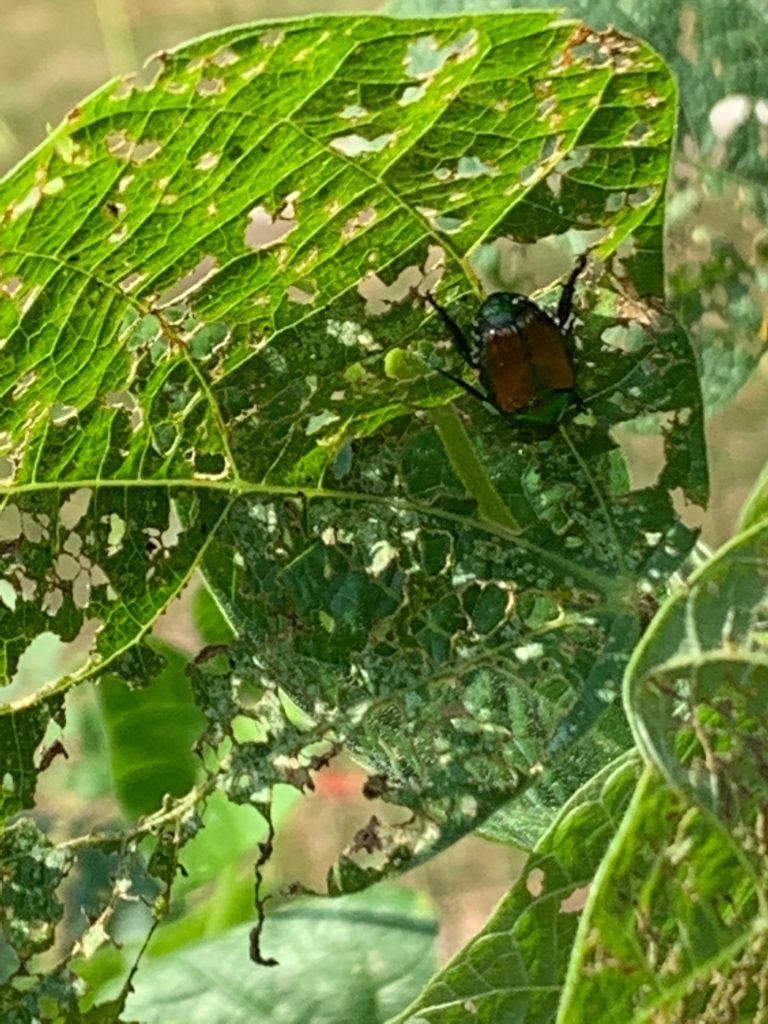
Adult Japanese beetles feed on the foliage, flowers, and fruit of 300 plant species, edible and ornamental. In addition, their larvae are white grubs that feed on the roots of turfgrass and can cause browning out of patches of lawn. The larvae look like other white grubs but are identifiable by V-shaped hairs on the underside of their abdomens. Detailed information on beetle and grub control is available in the publication White Grub Management in Turfgrass from the Clemson University Cooperative Extension. For a comprehensive examination of Japanese beetles, check out this May 2023 article in The Garden Shed: The Japanese Beetle/The Garden Shed.
As the photo shows, adult beetles eat the foliage between leaf veins. Weak plants are most susceptible to serious harm. Flowers are ruined. The most heavily damaged species include Japanese maple, asparagus, raspberry, soybean, crab apple, apple, apricot, plum, sweet cherry, sour cherry, peach, nectarine, poison ivy, roses, American linden, American and English elm, sassafras, grapes, and corn.
Control actions include:
- Avoid plants that are most susceptible.
- Hand pick beetles off plants. Squish or knock them into a bucket of soapy water. They are easiest to catch in the cool morning or evening when they are sluggish. Since they tend to congregate, removing beetles reduces the attraction of others to join them.
- Pyrethrin-based insecticides work when sprayed directly on the beetles. Bacillus thuringiensis (Bt) can work when sprayed on the foliage and ingested by the pests.
- Various neonicotinoids can kill beetles but are non-selective and can harm pollinators.
- Pheromone-based beetle traps are commercially available, but most of the research shows that the traps attract more beetles than they kill, so most experts do not recommend them.
The publication “Japanese Beetle,” Wisconsin Extension and the additional resources listed at the end of this article provide more information and are highly recommended.
Cabbage Moths and Cabbage Worms
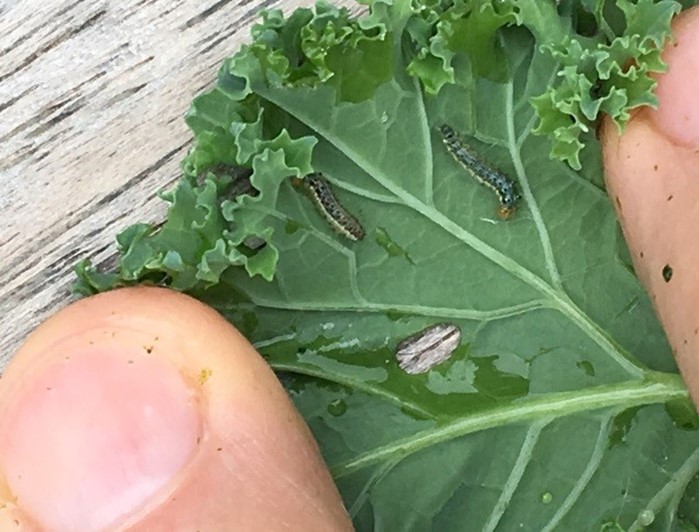
A variety of moth larvae attack plants in the brassica family, including cabbage, cauliflower, broccoli, kale/collards, rutabaga, radishes, and turnips. The moths deposit eggs on the underside of leaves. When they hatch, the larvae strip the plant leaves between veins. Common varieties are the imported cabbage worm, cabbage looper, diamond-backed moth larvae and cross- striped cabbage worm. They are active from mid-May through frost.
To manage damage:
- Since susceptible plants don’t need pollination, row covers can be used to keep moths from laying eggs on the plants.
- Regularly inspect leaves of susceptible plants. Look for eggs on the underside, holes in the leaves, green/black excrement, and worms. Just-hatched worms are tiny, so look closely.
- Hand pick worms off leaves regularly. Squish or drop them in soapy water to kill them.
- Create a diverse environment around the garden. Parasitic wasps and birds can help control cabbage worms.
- Effective organic insecticides include:
- Bacillus thuringiensis, spinosad, or neem oil that are sprayed on foliage. They affect worms in different ways but ultimately kill them. To protect pollinators, avoid spraying spinosad and neem oil on flowers.
- Pyrethrins can be sprayed directly on the worms.
The article Caterpillar Pests of Brassica Vegetables from the Utah State University Extension summarizes pests and treatments. See also “Cabbage Loopers – Not just pests of cabbage!” University of California Agriculture & Natural Resources (Nov. 2024)
Cucumber Beetles
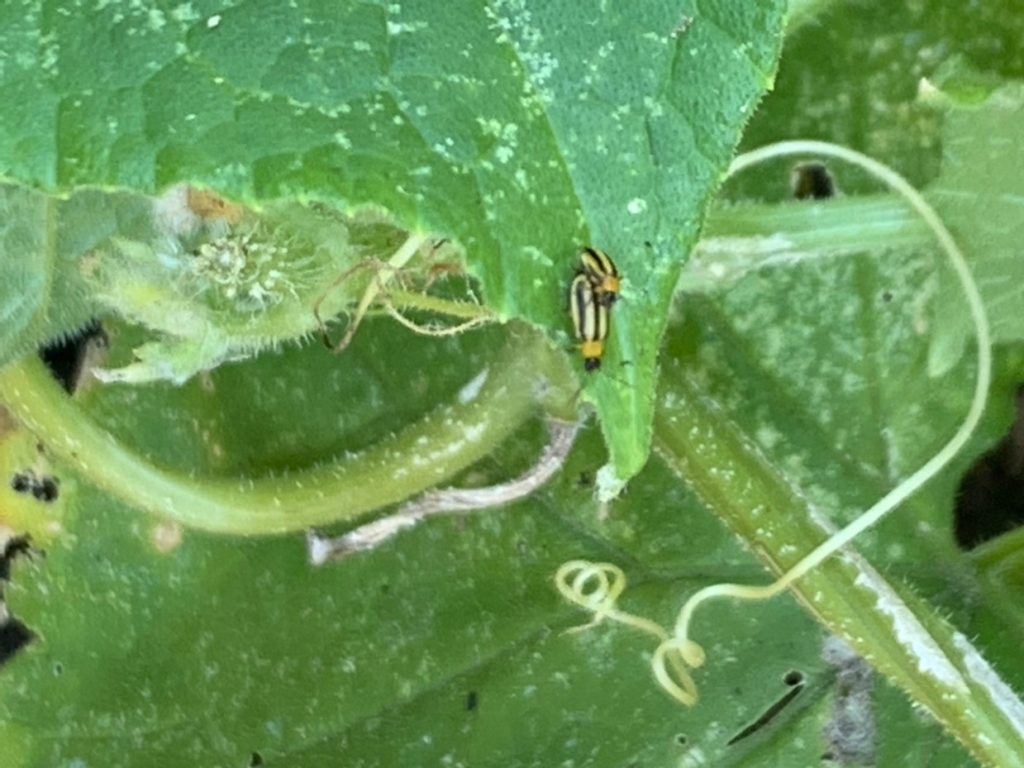
Striped and spotted cucumber beetles feed on the foliage of cucurbits, including cucumbers, melons, pumpkins, and squash plants, causing leaf browning. The bigger issue is that the beetles transmit a bacterial wilt that kills plants and can infect surrounding plants. Infected plants should be immediately removed and destroyed.
Control actions include:
- Plant in June or later to avoid peak early-season feeding
- Cover plants with row covers until flowering occurs
- Organic chemical control options include killing beetles with direct spraying of pyrethrins and spraying plants with kaolin clay to discourage feeding. To learn more about the use of kaolin clay, read “Particle Films as a Deterrent for Insect Pests,” Penn.State Ext.
A comprehensive explanation of cucumber beetle management is available in the publication Cucumber Beetles in Home Gardens from the University of Minnesota Extension. See also “Deterring Striped Cucumber Beetles in Organic Cucurbit Production Systems,” Penn.State Ext.
Colorado Potato Beetles
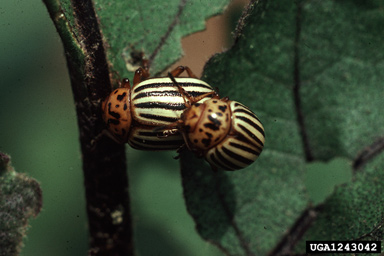
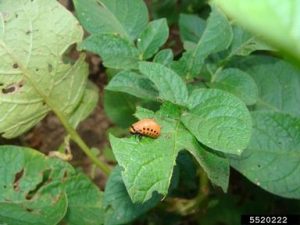
Both the larvae and adult Colorado potato beetle feed on the leaves of potato, eggplant, and to a lesser degree, tomato and pepper plants. Severe infestation will also damage fruit. Active period is May through August.
Management options include:
- Plant fast-maturing varieties later in the summer to avoid peak early-season activity
- Keep garden weed- and debris-free to deny the pests alternate food sources
- Scout the underside of plant leaves for orange-red eggs. Crush them.
- Hand remove larvae and beetles, drowning them in soapy water
-
-
-
-
-
- Encourage beneficial predators including birds, predatory stink bugs, parasitic flies, and lady beetles.
- Bt (Bacillus thuringiensis) can be effective against larvae
- Neem and spinosad are somewhat effective organic pesticides
- This pest has successfully developed resistance to numerous synthetic pesticides. If synthetics are used, rotate them to reduce the chance of increasing resistance.
-
-
-
-
-
Detailed treatment of potato beetles is offered in Colorado potato beetle from the University of Minnesota Extension and Colorado Potato Beetles from the University of West Virginia Extension.
Stink Bugs
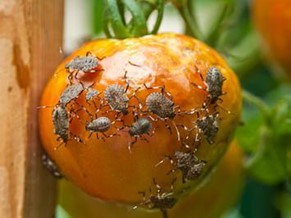
Stink bugs use their sucking mouthparts to damage many plants, but are noted for damage to beans, corn, tomatoes, and okra. There are about 50 species that are pests and a group that are beneficial, including the spined soldier bug. The beneficials are identifiable by their sharp shoulder tips; the pest species tend to have rounded edges on their shoulders. Signs of stink bug damage include:
- Light-colored spots on leaves
- Pimply growth on beans
- Circular depressions on peppers and tomatoes
- Collapsed corn kernels on corn.
Management tactics:
- Remove weeds, mulches, and ground covers that provide cover
- Insecticidal soap and pyrethrins can be effective on young nymphs. Adults are resistant to all insecticides.
- Hand pick eggs and bugs. Bugs drop when startled. Catch them in soapy water to drown them.
- Encourage natural predators and avoid systemic insecticides that harm beneficial predators
- Fruit damage can be cut out and fruit eaten. Damage is not a health risk.
Further detail is available from Stink Bugs on Vegetables, University of Maryland Extension.
Aphids
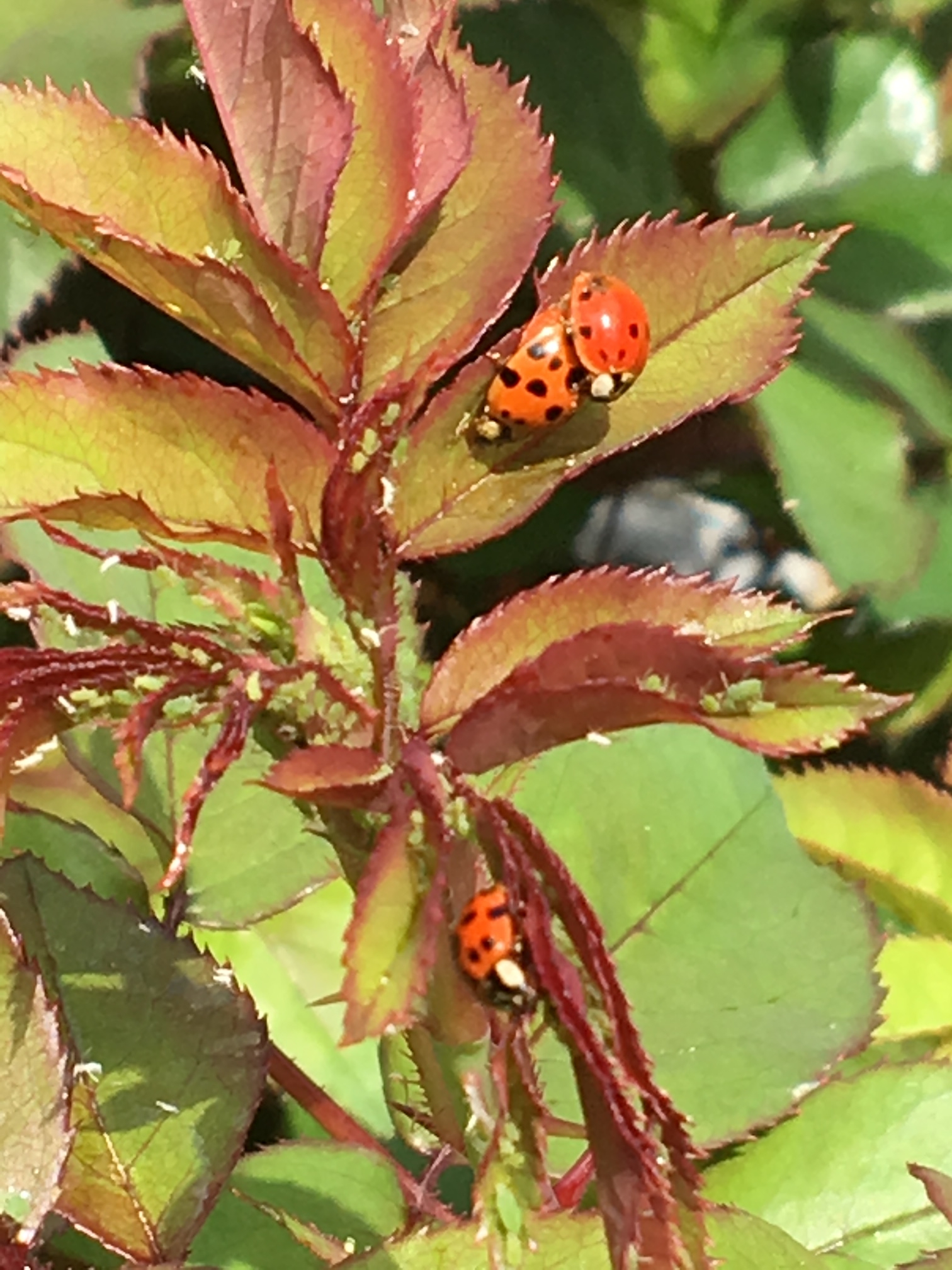
Aphids are small soft-bodied insects of many colors that suck fluids from plant leaves, causing browning and distortion. They secrete a honeydew that encourages sooty mold, and they can transmit viruses. They are attracted to tender young leaves and show up early in spring when new growth begins. They are also a common year-round houseplant pest. To learn about some lesser-known species of aphids, see “Aphids in Virginia,” Pub. No.444-220 (ENTO-617NP), Va. Coop.Ext.
Control measures:
- Keep plants healthy to avoid more serious plant damage. Prune off damaged foliage.
- Use slow-release organic fertilizers to avoid bursts of growth that attract aphids
- Spray plants with water to physically knock aphids off plants
- Spray plants and aphids thoroughly with insecticidal soap, an effective low-toxicity insecticide, which suffocates the aphids. Spray outside plants thoroughly before bringing them inside.
- Catch and kill them with yellow sticky traps
- Encourage natural predators like lady beetles and green lacewings by building a diverse natural environment and minimizing broad-spectrum pesticides
For a deeper dive into aphid control, check out Integrated Pest Management for Aphids from the Clemson University Extension.
Hornworms
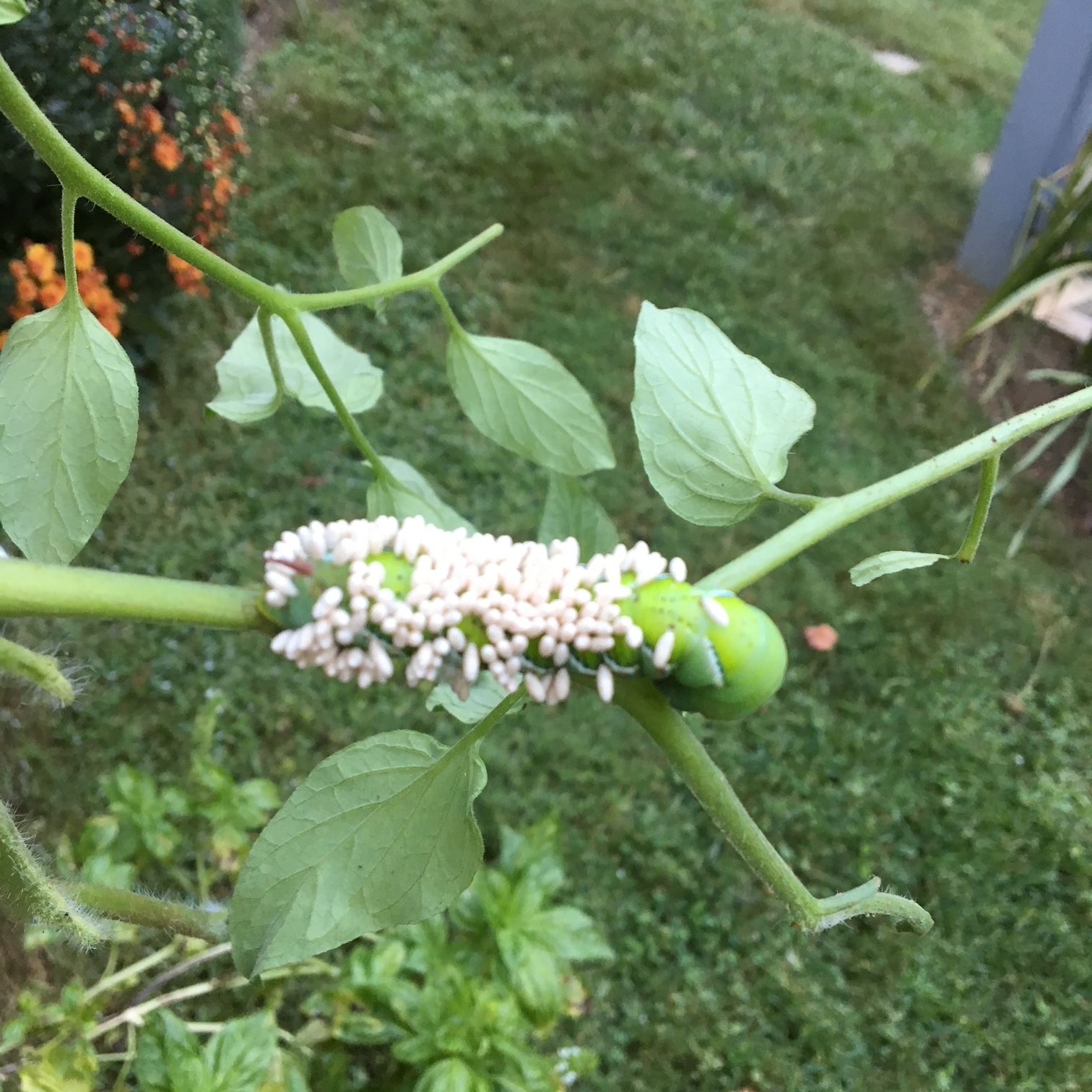
Tomato hornworms are large green caterpillars with horn-like tails that feed on the foliage and green fruit of nightshade family plants: most commonly tomato but also eggplant, potato, and pepper. Moths lay eggs on leaves in spring, the caterpillars feed for 3 or 4 weeks, then drop off plants, burrow into the soil, and pupate. A second generation emerges in mid-summer.
Control measures include:
- Inspect plants regularly, looking for eggs, damage to foliage and the hornworms themselves. Pick them off and destroy them.
- If caterpillars are cocoon-covered, as in the photo, leave them alone. It is best to allow the beneficial braconid wasps to propagate while eventually killing the hornworm.
- Encourage a diverse ecology in the garden area. Numerous other beneficial insects, including lady beetles and lacewings, attack eggs and young caterpillars.
- Insecticides generally are not necessary. See the publication Tomato Hornworms in Home Gardens from the University of Minnesota Extension for further guidance if needed.
Squash Bugs
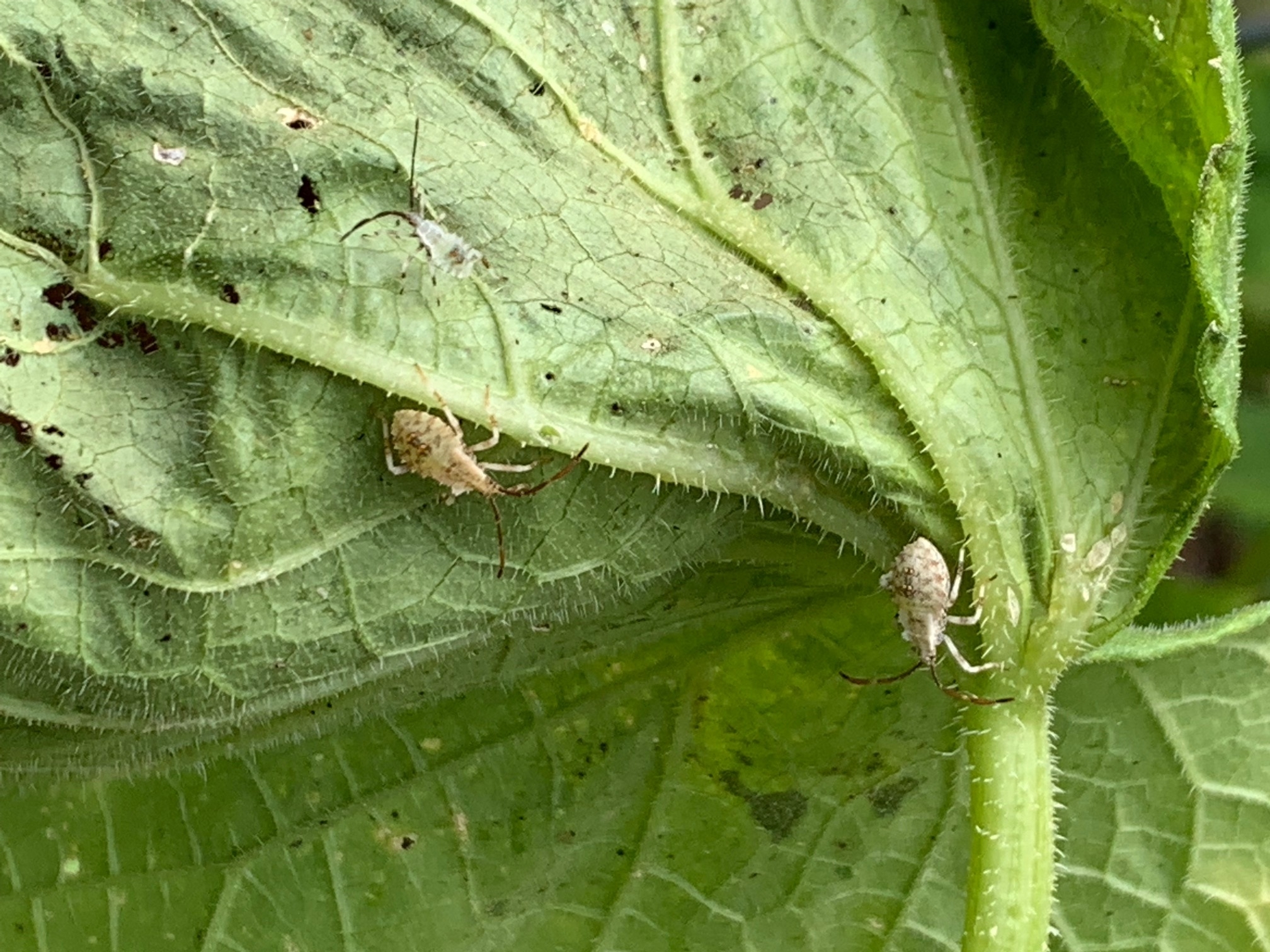
Squash bugs overwinter as adults and feed on cucurbit vegetation from early June through mid-summer. Females lay batches of about 20 copper-colored eggs on leaf undersides. Eggs hatch in 10 days and nymphs mature over 4-6 weeks. They hide under leaves when disturbed. Their feeding causes leaf wilting. They are not disease carriers.
Control measures include:
- Look for eggs on leaf undersides, crush them when found.
- Hand pick bugs and drop them into soapy water to drown.
- Trap them by laying a board on the soil overnight, lift it and catch the bugs sheltering there in the morning.
- It is best to keep the soil clean, no mulch, to minimize hiding places. Remove plant debris in fall.
- Spinosad can be used on nymphs early in the season when young plants are endangered by squash bugs. Mature plants generally don’t require insecticides.
- Further information is available at Squash Bugs from the University of Minnesota Extension.
Squash Vine Borer
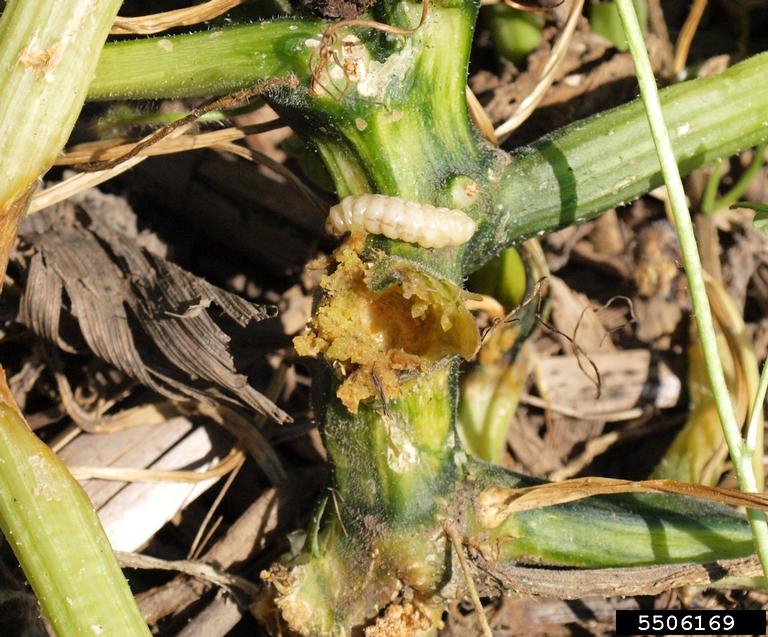
Photo: Jim Jasinski, Ohio State University, Bugwood.org
Squash vine borers are the larvae of a wasp-like clearwing moth that lays eggs at the base of squash plants. The larvae burrow into the vines, feeding on the vine center, blocking the flow of water through the plant, causing wilting. They are typically active from June through August.
Control measures include:
- Signs include wilting in the mornings and an entry hole with rotting vegetation at the entry point as per the photo.
- Inserting a sharp wire up the center of the vine can kill the larvae.
- The vine can be slit along its length to find and remove the borer(s). After borers are removed, heap soil over vines at stem joints to allow new roots to form to strengthen the plants.
- Spray kaolin clay at the plant base, repeated every few days to prevent larval entry.
There are organic and synthetic pesticides labeled for treatment of squash vine borers, but they are only effective against the eggs. “Once the borer enters the squash stem, treating with insecticides is a waste of time.” See Controlling Squash Vine Borers/North Carolina Extension/Pamlico County Center.
Additional information is available from Squash Vine Borer/Va.Coop.Ext..
Leafminers
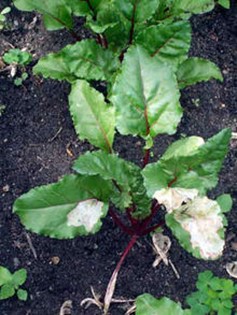
Leafminers are flies whose larvae — white carrot-shaped legless worms without a visible head — tunnel inside leaves, leaving white patches. They attack numerous edible and ornamental plants, typically not harming plant health but only damaging leafy vegetables.
Leafminer Controls for Most Vegetable Crops:
- Promote a diverse environment to enable beneficial insect assistance.
- Remove and destroy damaged leaves
- Rotate crops.
- Row covers can prevent egg-laying on plant leaves if there hasn’t been a prior infestation in the covered area.
- Spinosad applied regularly per package directions can help control miners.
- Find further information in Leafminers on Vegetables/University of Maryland Extension
But Virginia gardeners need to be on the lookout for a new invasive pest, the allium leafminer, which damages more than leaves. The allium leafminer can cause “significant injury” to garlic, leeks, onions, green onions, shallots, and chives, as well as ornamental alliums. For a detailed introduction, see Allium Leafminer in Virginia/Va.Coop.Ext., which describes the sign of infestation — basically a series of white dots — to look for:
A key symptom of ALM infestation is the unique and visibly obvious oviposition scarring. This occurs when adult females use their ovipositor to pierce holes in the leaves to feed or lay eggs. Scarring from this pest activity is characterized by multiple small, circular spots in a row on the leaf surface, generally near the tips and edges, visible to the naked eye.
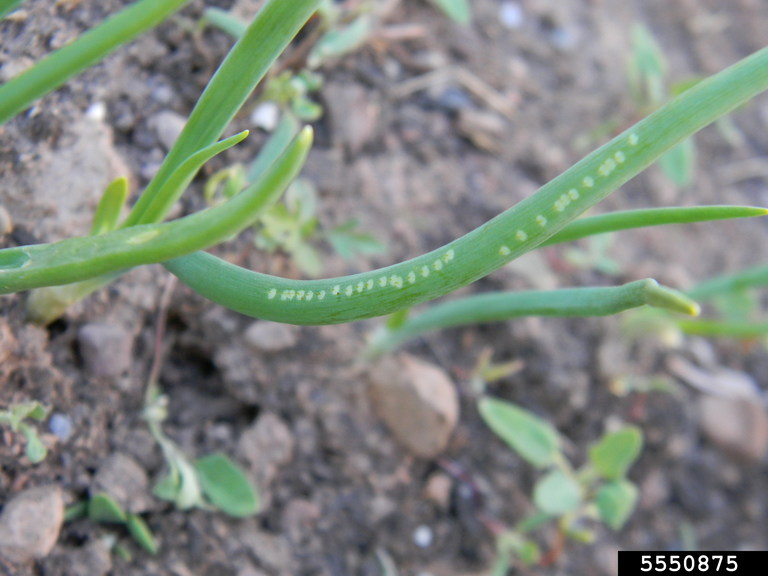
Scientists are still exploring control methods for the allium leafminer. So far, experts recommend daily scouting during peak seasons and using row covers. For detailed guidance, review Allium Leafminer Identification, Biology and Control/Cornell College of Agriculture & Life Sciences
Flea Beetles
Flea beetles are tiny black beetles that create holes in leaves of many plants, including radishes, broccoli, and cabbage, turnips, eggplant, peppers, tomatoes, potatoes, spinach, and melons. Severe damage can stunt or wilt plants.
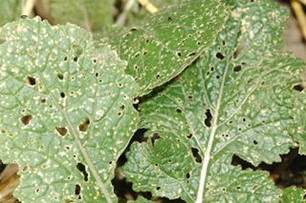
Controls:
- Keep beds clean to reduce food sources in spring, plant crops later when they will grow faster and reduce chances of severe damage.
- Beetles are jumpers and are not catchable by hand. Yellow sticky traps can be effective.
- Row covers can be effective when deployed prior to infestation.
- Promote a diverse pesticide-free or low-pesticide environment. Braconid wasps are beetle predators.
- Spinosad is an effective organic insecticide when applied per directions.
More information is available in Flea Beetles in Home Vegetable Gardens, Virginia Cooperative Extension, and Flea Beetles in Home Gardens from the University of Minnesota Extension.
More on Low-Toxicity Insecticides
Helpful information on some of the insecticides mentioned is found in these publications:
- Less Toxic Insecticides, Clemson University Extension and
- Diatomaceous Earth from the National Pesticide Information Center.
Takeaways
The eleven pests noted here have all visited my gardens. I hope they are relevant choices for you as well, and that the measures noted are effective.
Featured Photo: Wheelbug attacking Japanese Beetle. Photo: R Morini
Additional Sources:
Japanese beetles:
“Expert shares how to counter Japanese Beetles, the nemesis of turfgrass,” https://news.vt.edu/articles/2024/05/Japanese-beetle-control-expert.html (Va. Tech. News (May 2024)
“Japanese Beetle,” https://hort.extension.wisc.edu/articles/japanese-beetle/
“Japanese Beetles in yards and gardens,” https://extension.umn.edu/yard-and-garden-insects/japanese-beetles#using-pesticides-1591113
“Japanese Beetle Management without Insecticides,” https://fruit.wisc.edu/2022/07/28/japanese-beetle-management-without-insecticides/ (University of Wisconsin Fruit Program, Mitchell Lannan & Christelle Guédot, July 28, 2022)
“Japanese Beetles,” https://www.pubs.ext.vt.edu/2902/2902-1101/2902-1101.html, Va.Coop., Pub. No. 2902-1101 (ENTO-514NP)
Japanese Beetles | Extension | West Virginia University (wvu.edu)
Cucumber Beetles:
“Cucumber Beetles: Spotted or Striped on Vegetables,” University of Maryland Extension
“Deterring Striped Cucumber Beetles in Organic Cucurbit Production Systems,” Penn.State Ext.
Colorado Potato Beetles:
Colorado Potato Beetle Management / University of Kentucky, Department of Entomology
Stink bugs:
Brown Marmorated Stink Bug/Penn State Extension
“Stink Bugs,” University of California IPM
Aphids:
“Keep aphids under control with low-risk, natural strategies,” Oregon State University Extension
Hornworms:
Hornworms in Home Gardens, Virginia Cooperative Extension, Pub. No. 3104-1551
Squash Bugs:
Squash Bug in Virginia Home Gardens, Virginia Cooperative Extension Pub. No. ENTO-578
Squash Bugs in the Garden, Colorado State University Extension
Leaf Miners:
Leafminers in home gardens | UMN Extension