Cicadas are large plant eating insects, sometimes mistakenly called “locusts”, but are actually related to leafhoppers and spittlebugs. There are more than 1000 cicada species worldwide and more than 100 in the US. While they are active in many areas of the world, they are most common in the eastern and southern US. Their above-ground activity and noisy buzzing occur, in the Mid-Atlantic region, between late May and September. While their loud buzzing is well known to most of us, their broader life is less understood. Let’s explore their unique lifecycles and the impact cicadas have on our environment.
Cicada Basics
While there are many cicada species, they boil down to two basic historical groups: Annual or Dog Day cicadas and Periodical cicadas. The Annuals emerge every 1-3 years while the Periodical groups emerge in large numbers every 13 to 17 years. Expected future emergences are shown on this map from the US Forestry Service. The Periodical groups’ high numbers and loud noise tends to get them the most press prior to each expected appearance. Annuals are physically a bit larger with an average length of about 1 ¾” vs 1 ¼” for Periodicals. Annuals are generally dark green and black with green wing veins (lead photo). Periodical cicadas are black with red eyes, legs and wing veins (photo below).
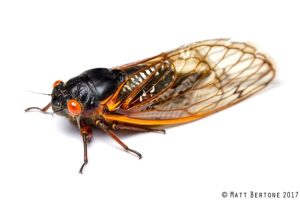
Cicadas emerge in spring when soil temperatures reach about 64 degrees at 8 to 10 inches under the surface. Periodical cicadas tend to emerge from the ground earlier than Annuals, but the annual and periodic cicada above-ground lives are similar. Emerging nymphs have six legs, the front two being the largest, since they are used to tunnel through the ground. After surfacing, they climb trees, shrubs or other vertical wood objects.
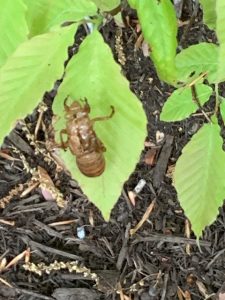
When the nymphs emerge from the ground, they possess an exoskeleton that has protected their bodies as they moved underground. When ready to molt, their thorax swells and splits the skeleton behind the head, allowing the nymph to emerge from the outer shell and leave it on the surface that it has been holding onto. Initially, the adults are light in color with no visible wings. Once free, fluid is pumped into the wings, causing them to unfold. After a short drying time, they are ready to fly.
A few days after emerging, the singing starts. While they are rarely seen during their mating periods, they are certainly heard. The loud, repetitive buzzing noises are the male cicadas’ mating calls. The sound is generated by a vibrating membrane in the cicada’s internal air chamber. The loudest noise level occurs when huge numbers of Periodical cicadas sing at once. But, not to be outdone, annual cicadas sometimes form groups that partner to synchronize their songs too. The NIH notes that the male cicada mating calls can reach about 90 decibels, about the sound of a gas-powered lawn mower.
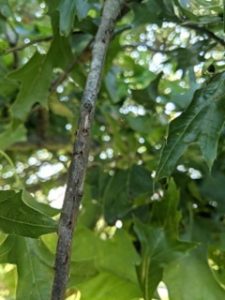
After mating, the females lay eggs by inserting them into the plant stem or branch wounds that they carve with their ovipositors. The adults begin dying shortly after laying eggs, falling to the ground and decomposing or providing food for other life.
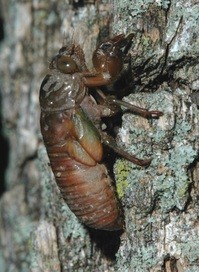
The eggs hatch after 6 to 8 weeks. The nymphs fall to the ground and burrow into the soil, moving to roots and feeding on fluids until eventually emerging to become adults. While they take years to mature, the variety of cicada species with varying time to maturity, assures that there will be multiple groups serenading surface dwellers every year. And then the cycle repeats.
Cicada Environmental Impacts
Cicadas are a food source for many animals including wildlife and livestock, raccoons, opossums, coyotes, snakes, fish, poultry and wild birds. At the same time, some birds leave areas of significant cicada populations, apparently due to the noise. According to Jim Warner of Ohio State, cicadas are apparently edible by humans. However, the USDA notes that, if you are allergic to seafood, eating cicadas may produce a similar allergic reaction.
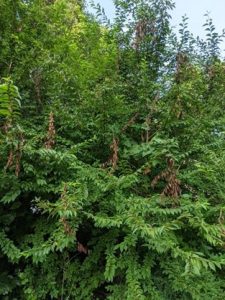
Cicadas generally don’t do much harm to plants, people or the environment. They can cause death of branch and stem tips that are scarred from the egg laying process. This won’t harm mature trees, but young trees can be damaged by heavy infestations and are best covered during cicada season.
Cicada Enemies
Cicadas, as noted above, are a food source for many animals and birds. They become food for Cicada Killer wasp larva after the cicadas are paralyzed by the wasp parents. Also, Cedar Beetles are parasites of cicada nymphs. It seems that the large cicada populations and years between generations may be a means of survival given their food appeal to various animal and insect species.
Conclusion
Cicadas, one of the longest-lived insects on earth, are rarely seen but much heard natural musicians of summer. Their song is an anticipated summer pleasure for nature lovers although their loud mating chatter can annoy others. They provide an important food source for many insects and animals and do little harm to our environment. Their multi-year below ground life cycle illustrates a unique survival adaptation for an otherwise vulnerable insect. For many of us who are enamored by nature’s survival processes, cicadas bring a welcome and unique aspect of life to our summer experience.
Sources:
Many thanks to Matt Bertone, NC State Extension, for granting use of his photos, including the lead photo of an annual cicada.
Cicadas | Colorado State University Extension Website
Cicadas | Home & Garden Information Center
Cicadas | Insects | Illinois Extension | UIUC
The Cicadas Are Coming! Fear Not, Though | NC State Extension
Emergence of the 17-Year Cicada
Cicada Life Cycle | Ask A Biologist
I Didn’t Know That!: Emerging Cicadas (U.S. National Park Service)
How Do Periodical Cicadas Know When to Emerge? | Scientific American