June garden tasks include harvesting spring crops and continued planting of warm weather crops. Weed and pest management become important, and moisture requires vigilance as temperatures rise and rainfall decreases.
Planting and Harvesting
The planting schedule for Hardiness Zone 7b is listed in VCE publication “Virginia’s Home Garden Vegetable Planting Guide”. June is the time to plant beans, cucumbers, eggplant, melons, okra, peppers, pumpkins, winter and summer squash, sweet corn, sweet potatoes, and tomatoes. Highlighted crops are linked to Extension publications that offer selection and growing guidance.
Harvests will likely be completed for spring crops including asparagus, some cabbage family members, and some greens. Idled space can be managed effectively in several ways as noted below.
Soil Care
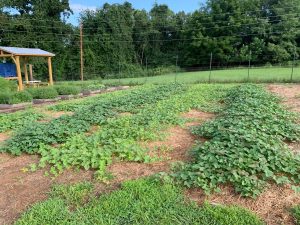
Regardless of current activity, caring for the soil makes sense. If new items are planted, mulch around and between them after plants have germinated, and are tall enough to catch the sun above the mulch. The mulch helps maintain moisture and reduce weed growth, while decomposing and strengthening the soil. Straw is a good mulch material. Just be careful not to use hay, which includes seeds and will lead to weed issues.
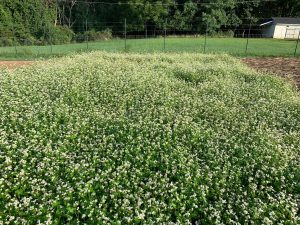
While mulching is an option to protect idle soil, a better one is to plant a fast-growing cover crop, like buckwheat, that grows well in summer and draws a lot of pollinators. It flowers in about 6 weeks. It is best to cut it about 10 days to 2 weeks after flowering but before seed maturity. If planted in June it can typically be cut in August, after offering pollinators some time to access the flowers, while allowing cuttings time to decompose prior to fall planting. The cut vegetation can be used as green mulch or added to a fall compost batch.
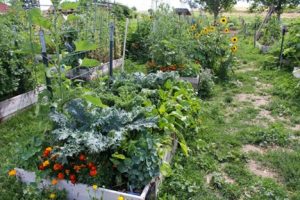
If the goal is a quick conversion to new crops, Interplanting — grouping plants together to cover the soil while reducing pest and disease issues — is another option.
Similarly, Intensive Vegetable Gardening advocates designing beds and grouping plants in ways that cover the soil, to resist weeds and provide diversity that benefits soil health.
The article Companion Planting from the Illinois Extension offers advice on planting a diversity of plants together for soil enhancement, pest control, and other benefits.
We have talked many times about how using trellises and other vertical gardening practices can help maximize production in a given space. A good summer use is to plant greens or other cool weather plants behind active trellises to take advantage of the shade they provide, allowing the greens to stay cooler and extend their harvest season. Row covers can also slow bolting. Also try planting bolt-resistant lettuce varieties such as Muir, Magenta, Cherokee and others to extend the greens-growing season. Search the internet for “summer crisp lettuces” to find options. The University of Maryland article Growing Lettuce in a Home Garden provides good advice on lettuce types and growing practice.
Successive plantings of beans and corn can extend their harvest seasons.
If garden space is limited learn about container gardening from the U of Maryland Extension publication Growing Vegetables in Containers and Salad Tables.
If intending to grow fall crops, check time-to-maturity of June plantings to be sure that bed space will be available in time for fall planting.
Water Management
Water is an increasingly valued resource. We are all wise to minimize water waste:
- Now that the ground has warmed, apply organic mulches such as chopped leaves, straw, and clean grass to conserve soil moisture while suppressing weeds and enriching soil as the mulch decomposes. Avoid mulching with hay, which contains seeds that can lead to weed issues. (Note that straw seeds are consumed as grains and are separated from stalks during harvesting while hay is grass used as animal feed and includes seeds).
- Vegetables require about an inch of water per week during the summer. Soaker hoses or drip irrigation make efficient use of water during dry spells.
- The soil surface dries quickly in summer heat. Put your finger a couple of inches into the soil to determine whether it is truly dry. You should be able to feel moisture. Moist soil also tends to be darker and stick together better than dry.
- Water plants at soil level in the morning and avoid splashing water and soil on leaves to reduce the risk of mildew and soil-borne disease transmission. Remove lower leaves on tomato plants to prevent inadvertent soil contact.
Other Suggestions for June Garden Management:
Avoid growing a single crop in the same space repeatedly. This can be done by rotating crops to different areas or by interplanting, i.e. planting a diversity of crops together. Planting the same item in the same space in consecutive years invites pest and disease issues.
It is better to plant corn in short, wide blocks than fewer, longer rows. Corn is wind-pollinated, and bunching plants together results in more complete pollination and more full-kernelled ears.
Cool mornings are the optimum time to pick vegetables for best texture and taste.
Stop harvesting asparagus when spears become thin, usually around mid-June.
Mound soil up around potato vines when vines are about 12” long. New potatoes grow on thin stems called stolons. Longer underground main stems produce more potatoes. Hilling also prevents the tubers from being exposed to the sun and turning green. Repeat once or twice during the growing season, adding 6-8” of soil or mulch to the original soil level.

In June, cole crops (cabbage, broccoli, kale, collards etc.) will likely be invaded by a variety of cabbage worms, including loopers, imported cabbage moth worms and the cross-striped cabbage worm. They are tough to control but can be managed. Holes chewed in leaves and dark excrement piles on leaves are signs of attack. If hand picking, look for yellow eggs on the undersides of leaves as a start. Pick the caterpillars off leaves regularly; they do fast damage when uncontrolled. They can also be managed with row covers or with the organic pesticide Bacillus thuringiensis (Bt), available at garden centers under a variety of trade names. For more details, review Garden Shed article OMG What’s Eating the Broccoli and 2026 Pest Management Guide: Home Grounds & Animals/VCE.
For a broader look into organic pest management check the U of Georgia Extension article Organic Strategies for the Garden and Home Landscape. It provides background on organic pesticides and advice on when to use different products. Beyond pesticide use, learn about IPM (Integrated Pest Management) practices to minimize chemical use, from the Garden Shed article Integrated Pest Management.
It’s always good to have some compost cooking. If you’ve saved some leaves and/or yard trimmings from last fall, combine them with grass clippings and kitchen waste now to generate compost that you can apply to your beds prior to winter. If you are short of “brown” inputs, torn up chemical-free papers including paper towels, napkins, pizza boxes, and corrugated boxes are good replacements. I find that a roughly 1 to 2 ratio by volume of grass clippings/kitchen waste to mulched leaves/straw/wood chips are about right to achieve a hot compost batch.
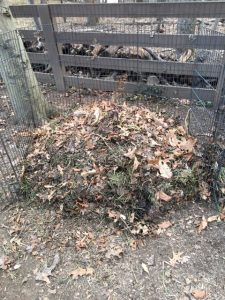
If your compost doesn’t get hot, add more nitrogen with grass and kitchen scraps. If it is slimy or gives off an ammonia smell, add leaves, paper, wood chips, sawdust (not pressure treated) or another carbon source. Keep the pile moist but not dripping and turn it weekly to keep it aerated. A second batch can take regular additions of materials as they become available throughout the summer. It decomposes more slowly and less uniformly than the hot pile but still produces a beautiful product in the end. It’s worth the effort! For more detailed guidance, review the Garden Shed article Backyard Composting with Practical Tips from the Pros or Making Compost from Yard Waste from the VA Cooperative Extension.
If a spring compost batch is ready for use, add some to beds and scratch it into the soil surface prior to planting, to give the soil an organic matter and nutrient boost.
Herbs planted in average soil need no fertilizer. Too much fertilizer may reduce flavor and pungency.
The best time to harvest most herbs is just before flowering, when the leaves contain the maximum essential oils. Cut herbs early on a sunny day.
Basil, a favorite summer herb, is susceptible to downy mildew. It is a fungal disease that can come from infected seeds, transplants, or via wind-blown spores from other infected plants. If your basil leaves turn yellow-brown and curl up, with a purplish fuzz on the leaf underside, remove and dispose of the plant to prevent spreading. Resistant varieties are available and work well. Look for them when purchasing seed. For more information on growing and using basil check Garden Shed article Basil: Beautiful and Aromatic.
If birds are threatening your strawberries, cover plants with netting or a row cover after plants are pollinated and berries are set. Hanging aluminum pie tins or CDs above the plants may also deter birds.
For information on fruit growing in your home garden, check out Tree Fruit in the Home Garden and Small Fruit in the Home Garden from the VA Cooperative Extension.
More tips for edible and ornamental gardens plus lawn care are available on the Monthly Gardening Tips listed on the PMG website piedmontmastergardeners.org.
I hope that this information is helpful and look forward to meeting again next month at The Garden Shed.
Sources:
“Vertical Gardening Using Trellises, Stakes and Cages,” VA.Coop.Ext. Pub.HORT-189
“Growing Potatoes in Home Gardens”, University of Minnesota Extension.
Featured photo: June Vegetable Garden. Photo: R Morini