Looks Like a Moth, Acts Like a Vampire: The Spotted Lanternfly (SLF)
Unpacking the title alone tells you a lot about what a spotted lanternfly is—and what it isn’t. For starters, it only sort of looks like a moth. It doesn’t “suck” blood—thank goodness—it “sucks” sap, which is very bad news if you happen to be a plant. And despite the name, it isn’t a fly at all; it’s a planthopper. For an insect with wings, SLF is a remarkably poor flier, although it’s a strong jumper.
Reunited: Tree and “Fly”
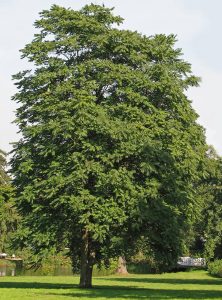
The real story doesn’t begin with the lanternfly at all. It begins with a plant that reached America more than 200 years earlier and—if you didn’t know better—seemed to be waiting for its perfect partner in invasion. The plant arrived on purpose. The lanternfly did not. It slipped into the country the way many invasive insects do: hidden on a load of construction materials, unnoticed until it was far too late. Tree of heaven and the spotted lanternfly both originate in China, with their strongest natural overlap occurring in central and northern regions. Scientists now know that feeding on tree of heaven — Ailanthus altissima — makes lanternflies unpalatable to predators that might otherwise eat them. In other words, the tree gives the insect a chemical shield. University of Michigan Extension notes: “Immature SLF nymphs and adults have higher survival rates and adult females produce many more eggs when they feed on ToH compared with other tree species.”
The genus name Ailanthus comes from ailanto, an Ambonese word from Indonesia’s Molucca Islands meaning “tree of heaven” or “tree of the gods.” Early European botanists applied the name to a different Southeast Asian species before it was transferred to Ailanthus altissima, with the spelling later influenced by the Greek anthos (“flower”). A French botanist formally established the genus in 1788. The Latin epithet altissima means “tallest,” reflecting the tree’s impressive height. Depending on the authority, the genus includes six to ten accepted species.
.jpg#Summary)
As New York City surged into a major growth spurt in the early 19th century, municipal leaders decided the streets needed trees—and they needed them fast. They wanted something that would shoot up straight and tall, tolerate urban congestion, and thrive with minimal fuss. Tree of heaven fit the bill: it can grow 50 feet in 25 years and ultimately reach 60–80 feet. Prince’s Nursery, then the region’s dominant supplier, eagerly promoted it. Its 1823 catalog gave the species star billing, and its exotic origin in China only heightened its appeal to a city hungry for worldly flair.
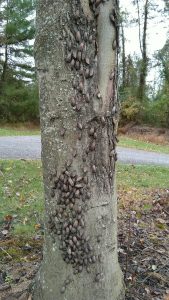
The tree had already been circulating in the West for decades. It was introduced to Europe in the 1740s during a wave of fascination with Chinese plants, and it reached the Philadelphia area around 1784 thanks to the botanically ambitious William Hamilton. In China, it already had a long cultural and medicinal history. In a neat example of ecological irony, the spotted lanternfly was first detected in the U.S. massing on tree of heaven trunks near a stone yard in Berks County, Pennsylvania, in 2014 and large aggregations on tree of heaven were widely reported in the years that followed. SLF was first detected in Virginia in 2018 and in Albemarle County in July 2021. The two species, reunited on American soil, quickly formed an invasive powerhouse.
As it turned out, tree of heaven could also shrug off the waves of inchworms that plagued mid‑19th‑century American cities. The caterpillars devoured the same diverse street trees beloved by residents, but tree of heaven, researcher Catherine McNeur observes, was barely touched. Its one serious drawback was the foul odor produced by male trees, which earned it the nickname “stink tree.” In the age of miasma theory, when foul smells were often associated with disease, the tree’s odor was seen as more than a nuisance. Further, aesthetic tastes were changing and the tree grew aggressively. In 1853, Congress included a proviso in an appropriations bill directing federal officials to no longer purchase or plant tree of heaven on federally controlled property in Washington, D.C. Other cities now began to target the tree. Some critics even tied their dislike of the tree to its foreign origins.
In the end, its resistance to inchworms saved it. It withstood the worst an urban environment could throw at it, thriving opportunistically in disturbed spaces—from vacant lots to cracked sidewalks. Simply cutting it down, as we’ll see, was never a quick fix. It became a symbol of resilience, a quality immortalized in Betty Smith’s A Tree Grows in Brooklyn (1943), where it stands as a metaphor for the protagonist’s determination to better herself. The tree spread westward as well. It was introduced to California in the 1850s by Chinese immigrants for medicinal and cultural reasons. And in 1861, it was deliberately planted in Philadelphia as a host for Samia cynthia, the Ailanthus silk moth, in hopes of launching an American silk industry that never materialized.
Today, tree of heaven is the preferred host of the spotted lanternfly—lanternflies can survive without it, but life is undeniably better for them with it. If given a choice they choose it over other targets. Beyond that, the tree is a formidable invasive in its own right, forming dense stands that block sunlight and releasing allelopathic chemicals that inhibit or kill surrounding vegetation. And it does not go down without a fight: it resprouts vigorously from cut trunks, and because it is dioecious, females produce vast numbers of seeds while males produce enormous quantities of pollen‑rich flowers. Admired once, if only intermittently, tree of heaven is now internationally reviled.
Look-alikes: Tree and Bug
Evolution often produces organisms that resemble one another, yet each lineage retains subtle traits that set it apart—a principle that shows up clearly in the many look‑alikes associated with both tree of heaven and the spotted lanternfly. Tree of heaven is frequently mistaken for staghorn sumac, black walnut, black locust, and several hickory species. Spotted lanternfly look‑alikes vary by life stage: adults can resemble tiger moths, giant leopard moths, Ailanthus moths, and underwing moths; nymphs are easily confused with wheel bug nymphs, boxelder bugs, milkweed bugs, and brown marmorated stink bug nymphs; and egg masses can be mistaken for spongy moth egg masses, wheel bug egg clusters, or even lichen patches and mud dauber nests. Because the overlap can be confusing, reliable references include Virginia Cooperative Extension’s Possible Spotted Lanternfly Immature Look‑alikes in Virginia, Michigan Invasive Species’ Spotted Lanternfly Look‑Alikes, and Penn State Extension’s Tree of Heaven: Accurate Identification. Two quick field clues help cut through the uncertainty: spotted lanternflies hop vigorously, and tree of heaven flowers give off a distinctive odor often compared to stale peanut butter or cat urine. The notorious tree of heaven odor comes from male flowers. Female trees do not produce the foul bloom smell. Both sexes, however, have smelly leaves and twigs when bruised.
Know the Enemy
The spotted lanternfly (Lycorma delicatula) carries a name rooted in an 18th‑ and early 19th‑century scientific misunderstanding. Early naturalists, working from preserved specimens and travelers’ accounts, believed that certain lanternflies in the family Fulgoridae were bioluminescent, with their elongated, snout‑like head structures glowing at night. Although that misconception applied to other members of the family—not Lycorma delicatula specifically—the name “lanternfly” persisted. The species first entered Western scientific literature in 1839 and was formally described in 1845. Today we know that none of these insects actually emit light. Nonetheless, the species remains classified within Fulgoridae because its morphology aligns with the family’s traits. This taxonomic history is preserved in its name: Fulgoridae derives from the Latin fulgor, meaning “brightness” or “lightning,” while the species name delicatula means “dainty,” “delicate,” or “luxurious.” The etymology of the genus name Lycorma is less certain. Carl Stål (1833–1878), a Swedish entomologist, often drew on classical geography for his genus names. He established Lycorma in 1863; the name is most likely linked to the ancient Greek Lycormas River.
.jpg)
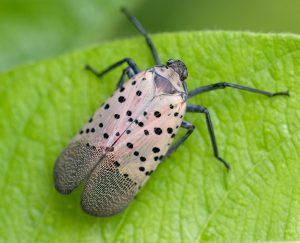
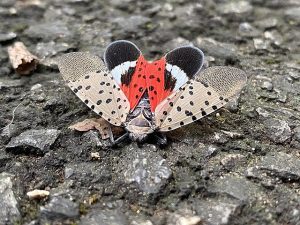
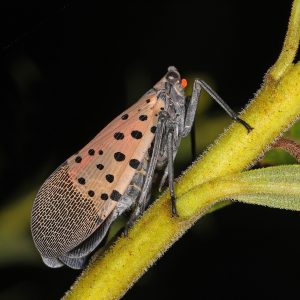
Spotted lanternflies are planthoppers, not flies, and adults are strikingly beautiful—for a reason. At rest, they fold their wings tight against tree bark, using the mottled forewings as camouflage. But when they’re about to jump or feel threatened, they flash those vivid red-and-black hindwings. It’s a warning display, perhaps advertising to predators that they may be unpalatable thanks to toxins picked up from their preferred host, the tree of heaven. Its common North American relatives include cicadas, leafhoppers, treehoppers, and various types of planthoppers, such as the small green acanaloniid or the wax-covered Flatid.
Spotted lanternflies can fly, but they’re not good at it. Most of what looks like flight is really a short glide or a controlled fall. They climb upward first, then launch themselves, and the distance they travel depends largely on how high they were when they jumped. They cannot gain altitude under their own power. Their real strength is jumping. Like other planthoppers, they use a high‑speed hydraulic-like system in their hind legs to catapult themselves with remarkable force. Once airborne, they can steer slightly by opening their wings, but they rely on their legs—not flight—for most movement. When they land, specialized adhesive pads on their feet allow them to stick easily to bark, leaves, metal, or even glass. Through a combination of crawling, hopping, and short glides or brief flights, an adult SLF may cover several miles (Cornell cites 3-4) of wandering, erratic movement over the course of its lifetime. Their travel is anything but linear. Adults can also be carried by the wind, and long‑distance spread is driven far more by hitchhiking than by their own efforts. From nymphs to adults, they are driven to climb upward. Nymphs make the journey to find the tenderest plant parts, falling only contributes to dispersal on the host plant or other plants.

Spotted lanternflies feed with a needle‑like mouthpart that pierces a plant’s phloem. They don’t actively suck sap; although they possess a pump mechanism, phloem feeders rely primarily on the plant’s own positive vascular pressure to push sap into the insect. Because phloem sap is sugar‑rich but nutrient‑poor, SLF must process huge volumes of it—producing correspondingly large amounts of sugary waste called honeydew. That honeydew is trouble. It creates a perfect substrate for sooty mold, which coats leaves and bark and interferes with photosynthesis. The sugary deposits also attract other insects, especially wasps, turning an infested tree into a sticky, buzzing mess.
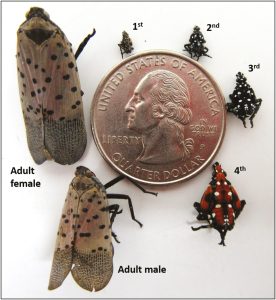

The reproductive cycle of the spotted lanternfly begins in late summer. Adults reach sexual maturity in late August or September, and females are slightly larger and more robust than males, with a fuller abdomen that becomes especially noticeable when they are carrying eggs. Attraction is achieved through a combination of pheromones transmitted through body volatiles (airborne chemical compounds) and honeydew excrement, which help bring lanternflies to the same host plant. Spotted lanternflies also produce substrate‑borne vibrations by rapidly vibrating their abdomens. These vibrations travel through the plant surface, where other lanternflies detect them through sensory organs in their legs, helping them coordinate courtship once they are already in close proximity. Rather than drumming on wood like some other planthoppers, SLF rely on abdominal tremulation for these signals. Once nearby, males use close‑range contact and courtship behaviors to identify and mate with a female.
Mating can last for several hours, with the male and female joined end‑to‑end while sperm is transferred. Females can mate with multiple males. Although females feed on the trunk of a tree, they generally head upward to lay egg masses and research reveals that 80-90% of egg masses are found at 10 feet or higher – often on the underside of branches. After mating, the female searches for a place to lay her eggs—and she is not selective. Each female produces one to two egg masses, each containing 30 to 50 eggs. She coats the mass with a specialized waxy secretion that hardens into a gray, mud‑like smear, protecting the eggs through winter, but they are still vulnerable to extreme cold. Studies show increasing mortality below about 10°F, with near‑total die‑off when temperatures reach –13 to –15°F for extended periods. This coating also works brilliantly to camouflage them. The small red dot at the tip of the female’s abdomen is the end of her ovipositor, the egg‑laying organ, which remains slightly visible even when retracted.

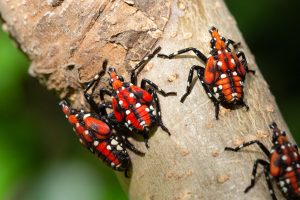
The early nymphal instars – an instar is a growth stage between molts in insects and other arthropods — are inconspicuous until the bright red fourth instar. Nymphs feed on a wider range of plants than adults and prefer tender new growth, leaves, and stems. Adults shift to woody plants and often congregate on trees with high sugar content.
Spotted lanternflies continue to evolve. There is evidence that they may have genetically learned a trick or two in China’s urban centers. Urban evolution in China appears to have “pre‑adapted” them for invasion: studies of Shanghai populations show that city living selected for genes tied to heat tolerance, pollution resistance, detoxification, and rapid reproduction, creating hardy urban insects that were already primed to survive the stresses of new environments long before they arrived in America. When scientists discuss “detoxification” in spotted lanternflies, they mean the insect’s ability to neutralize or tolerate the toxic chemicals in tree of heaven sap. The China study suggests that spotted lanternflies have the biochemical tools that could support pesticide resistance in the future, but it does not show that resistance is developing now. See the 2026 article “Cities as evolutionary incubators for the global spread of the spotted lanternfly” in Proceedings of the Royal Society B: Biological Sciences, 293(2064), 20252292.
.jpg)
Do Spotted lanternflies have enemies? What eats them? In China, spotted lanternflies are kept in check mainly by tiny parasitic wasps that lay their eggs inside SLF egg masses, with the wasp larvae consuming the developing lanternflies. Unlike in the U.S., where birds and generalist predators occasionally eat the adults, these egg‑attacking wasps are the only consistently documented natural enemies in the insect’s native range, and they effectively bypass the lanternfly’s chemical defenses and warning coloration by targeting the vulnerable egg stage. In the U.S., spotted lanternflies are eaten by a broad diversity of opportunistic predators, however none suppress the population in a significant way. The most reliable dinners are praying mantises, spined soldier bugs, yellow jackets, orb weaver spiders, and wheel bugs, all readily attack nymphs or adults. Among vertebrates, chickens, ducks, and sometimes cats and dogs will eat them, and several backyard birds—especially gray catbirds, northern cardinals, blue jays, and tufted titmice—have been documented eating adults. An assortment of animals, including frogs, koi, goldfish, bats, squirrels, and garter snakes, consume them opportunistically. While the list may seem long, the U.S. predator community nibbles at lanternflies but doesn’t exert the strong, consistent pressure seen from egg‑parasitic wasps in the insect’s homeland.
Why is Something So Pretty Such a Problem
Spotted lanternflies are called many things—some unprintable—but almost never “ugly.” This is deeply inconvenient, because it makes them far too easy to admire while you’re trying to kill them. Once you get past the instinctive aversion to insects, they’re striking at every stage of their life cycle. And while some species mimic their appearance, once you’ve spent any time searching for them online, they are relatively easily recognized.
It helps to begin with a little myth‑busting. Penn State Extension did exactly this in a January 2022 post, Spotted Lanternfly Lore: Penn State Experts Clear Up Falsehoods About Pest. Here are three selected myths. Myth: Spotted lanternflies kill all plants and trees. In reality, they rarely kill their hosts. Grapevines are one notable exception, and the piece indicates that their feeding can also kill tree of heaven, although current research reveals this is unlikely to be the primary cause of death. What lanternflies can reliably cause is stress—enough to make trees more vulnerable to other pressures such as insects, disease, or drought, and enough to reduce growth. Myth: Homemade sprays are safe and effective. Dish soap, vinegar, glass cleaner, and similar mixtures can be harmful to plants, pets, and people. If you decide to use a chemical approach, you’re far better off choosing a registered insecticide and precisely following the label. Myth: Spotted lanternflies are harmful to humans, pets, livestock, or buildings. They don’t bite or sting, and they don’t damage structures.
What isn’t a myth is their ability to make being outdoors miserable. A large SLF gathering can turn a pleasant afternoon into something that feels more like a low‑budget horror film. And remember, while light to moderate feeding on mature hardwood trees typically has minimal to negligible impact on growth, saplings suffer more, and severe feeding can slow growth.
.jpg)
What’s on the Menu
Spotted lanternfly has been found on 172 different kinds of plants worldwide. That includes plants it feeds on, plants it lays eggs on, and plants it’s simply been seen using. Scientific studies confirm actual feeding on 103 types of plants across 33 plant families, with 56 of those feeding records from North America. Together, this shows that spotted lanternfly uses a very wide range of hosts (Barringer & Ciafré 2020). At different stages of development, SLF feeds through leaf veins, stems, branches, twigs, and trunks. Tree of heaven remains its strongly preferred host wherever it is available. Although not strictly required, SLF develops faster, survives better, and produces far more eggs on it than on most other plants. Even without tree of heaven, however, the insect can complete its life cycle on several woody species.
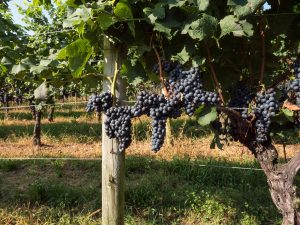
Adults commonly feed on grapevines, black walnut, river birch, willow, sumac, and red or silver maple. Grapevines are especially vulnerable: severe infestations have been documented to cause dramatic yield losses, in some trials approaching 90%, and may kill vines by weakening them and depleting root carbohydrate reserves. Nymphs are more generalist than adults and often probe roses, herbaceous perennials, and other non‑woody plants, though these do not support full development and are not considered true hosts. Adults rarely feed on herbaceous plants. While SLF nymphs and adults are occasionally observed on conifers, including pine, conifers are not identified as true feeding hosts in the broader literature. Instead, they more commonly serve as resting sites or egg‑deposition surfaces, and even large SLF aggregations on a conifer do not by themselves indicate sustained feeding.
SLF feeds only on phloem sap, not fruit. Grapevines and many orchard trees are especially vulnerable because their woody tissues offer the high‑pressure phloem that SLF prefers. Feeding produces large amounts of sugary honeydew that promote black sooty mold on leaves and stems, interfering with photosynthesis. For a seasonal guide to preferred host plants by life stage as observed in Pennsylvania, see the common plant hosts table (table 2) in the Penn State Extension Spotted Lanternfly Management Guide.
Lanternfly Season is Upon Us
I could have titled this section Now What Do I Do? Fortunately, we’re not navigating this stage—or the ones ahead—without help. Several excellent guides lay out what to expect and how to manage the onslaught headed our way. If you’re feeling perplexed, reviewing one of them is time well spent. See the section SLF Management: Suppression but Not Eradication farther along in this article for links to these resources. You may ultimately decide that chemical control is necessary, but if you go that route, timing and product choice matter. Being informed isn’t just about personal and environmental safety; it’s the difference between an effective treatment and a wasted effort.
March Through April
There is one generation of spotted lanternfly each year. Adults laid eggs on many surfaces through fall 2025, and those eggs overwinter and typically begin hatching from mid‑ to late April into early May. Early nymphs are black with white spots. March and April are your preparation window: keep checking for egg masses and destroy any you find, and decide early whether you’ll use traps—sticky bands and circle traps only work if they’re in place before nymphs start climbing.
Start thinking about tree of heaven removal and see the appropriate section under SLF Management: Suppression but Not Eradication below for timing and strategies. For a TOH with a diameter of 4 – 6 inches, late winter until early spring is a good time for basal bark herbicide treatment. If you have large and numerous trees of heaven, a tactic to control SLF may include removing all female trees to prevent seed production and leaving a few male trees as systemic insecticide treated “trap trees.” These male trees cannot produce seed but strongly attract lanternflies, which feed heavily and die after ingesting the systemic treatment. VCE guidance for residential homeowners, who typically will not have large TOH infestations, focuses on suppressing or removing tree of heaven rather than implementing a trap-tree system. Removal, following specific guidelines, is the preferred approach. Where immediate removal isn’t feasible, herbicide treatments are appropriate. The trap-tree approach appears in guidance aimed at vineyards and properties with large infestations. If you have large Ailanthus trees that cannot be removed, the application of systemic insecticides by a licensed professional is appropriate.
Clearly, it’s now time to start thinking ahead. The March 3–5, 2026 Spotted Lanternfly Summit (StopSLF.org) covered topics including SLF biology, host-plant interactions, government management efforts, biological controls, and agricultural and economic impacts. Sticky bands were not a featured agenda item, though they remain a widely discussed tool in SLF management. Some see sticky bands as useful for both monitoring and reducing small populations. They have been a popular way historically to catch both nymphs and adults. But while they can have an impact locally, they will not reduce numbers overall. A significant drawback is bycatch: sticky bands can trap birds, small mammals, and beneficial insects, making wildlife barriers a must. Circle traps are generally seen as the most effective mechanical trap option for spotted lanternfly and, according to Penn State, work best April through July for nymphs. VCE has not recommended circle traps in its current 2025 Best Management Practices for Spotted Lanternfly in Yards and Landscapes. The 2025 BMP does not mention trapping, while the superseded 2019 BMP did recommend sticky band traps on trunks from May through October but did not include circle traps. Guidance in several states has avoided or moved away from traps because they offer limited control and, in the case of sticky tape, pose documented risks to wildlife. However, if a homeowner still chooses to use traps, late April is the prime time to begin deploying them with great care. Sticky bands should only be used with mesh guards to protect wildlife, and they can be paired with funnel‑style circle traps. Wire guards are less safe because they behave like a rigid cage and can trap small mammals. Place traps about four feet up the trunk of a favored host tree and check them frequently. If you begin catching beneficial insects or small animals, adjust or remove the setup immediately. Never leave bands or traps in place once they are no longer needed. Clear weeds and low branches around host trees to eliminate staging spots.
Contact insecticides or biological controls can be used May through early July and repeated in the fall as needed. Apply as spot sprays to “trunks, branches, and foliage of ornamental and shade trees where SLF nymphs are found” (BMP 2025). A list of sprays follows this BMP guidance. A spot spray is a targeted application directly to a live SLF aggregation. Fungal preparations such as Venerate XC, an organic, biological control, can be applied from early May to early June. This is the only biological control option VCE specifically identifies in Best Management Practices (2025).
January Through March
Eggs have overwintered and begin hatching mid- to late April. Adults appear by late July and remain present into December, or until a hard freeze kills them. Egg‑laying begins in September and continues until cold weather ends the season. The entire cycle is explained in Virginia Cooperative Extension’s Identification and Life Cycle of Spotted Lanternfly in Virginia. For something a little different and with wonderful illustrations, see Molly Schafer’s (Mt. Cuba Center) The Life Cycle of the Spotted Lanternfly (24 October 2012).
Winter is for detective work, not insecticide spraying. Although VCE advises you can apply dormant oil or horticultural oil directly on egg masses higher up in tree canopies from mid-February to early April, beginning when overnight temperatures do not go below freezing the night after application. Do not use after budbreak in spring. Begin realizing that while winter was challenging this year, it did not solve our lanternfly problem. In a WSLS television report, Virginia Tech entomology professor Douglas Pfeiffer says, “. . . lanternfly eggs are up on trees all the way along the whole heights of trees, so they won’t be getting much protection from snow.” And in the same feature, an exterminator advises hatches might be reduced but not eliminated at sustained temperatures of -10 to -30. These temperatures are far below what most of Virginia experiences. He doesn’t see it having much effect at all. So, we were left with viable egg masses everywhere—had we only taken the time to look. It’s the season to scout and scrape, even though most of those masses are probably tucked into places you’ll never reach. Before spring travel, clean bumpers, wheel wells, and truck beds; be creative, because lanternflies are. There is no evidence that a car wash or power-washer will remove eggs masses. If your property has tree of heaven, winter is also the perfect time to identify clumps and trunks for removal. Now we’ve cruised through March and, as I’m writing this, we’re in mid‑April.
April into June
Now let’s journey back from what’s past into what’s ahead. By mid‑April, typically into early May, the first‑instar nymphs begin to appear—tiny black specks with white spots that hop and climb toward the newest, tender growth. This stage runs through June, and if you’re not watching closely, you can miss most of the action. By early July, the fourth instars turn red with white spots and black patches. At this point, you can sometimes remove a nymph from a plant and squish it or drop it into a jar of soapy water or alcohol.
Repeat March – April guidance and remove root suckers at the base of trees where nymphs may gather. Contact insecticides or biological controls can now be used and can be repeated in the fall if needed. VCE recommends contact sprays from May through early July and fungal preparations such as Burkholderia spp. strain A396 (Venerate XC) can be applied early May to early June. Never spray when pollinators are active, and avoid applying neonicotinoids such as imidacloprid or dinotefuran to blooming plants. Once absorbed, these systemic chemicals move into the plant’s sap, killing sap‑feeding insects when they ingest it. Systemic insecticide time is around the bend.
July Through August
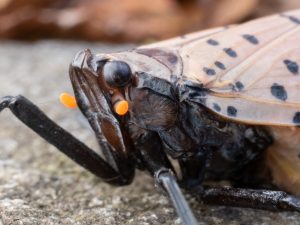

By mid-July, adult spotted lanternflies begin to appear. Their feeding can create dramatic scenes—large clusters gather on trees, and the honeydew they secrete coats leaves, trunks, outdoor furniture, and anything beneath them. Both nymphs and adults produce honeydew, but it becomes far more noticeable once adults arrive. Sooty mold quickly colonizes this sticky layer, which can further stress plants by blocking light and reducing photosynthesis.
If the sooty mold is bothersome, you can rinse trunks or surfaces with water, though this is mainly for aesthetics. You can spot‑spray adult aggregations using products specifically indicated for spotted lanternfly. To protect pollinators, avoid spray drift. Grape growers especially may need to use designated insecticides when populations are high. Remember, the current Virginia Cooperative Extension Best Management Practices (2025) does not include traps as a control method. However, if you choose this option, sticky tape or circle traps will continue to capture some nymphs and adults as they climb. VCE recommends systemic insecticides as soil drenches or trunk sprays from mid-July to September and contact insecticides or biological controls can be used May through early July and can be repeated in the fall if needed. Fungal preparations are limited by moisture and temperature.
If a plant is being heavily fed on, make sure it stays well‑watered. Adequate hydration helps reduce stress and supports recovery from feeding damage. Avoid unnecessary pruning during this period, as pruning adds additional stress to the tree.
Fall
.jpg)
Now, after an irritating summer, imagine it’s fall—unfortunately, it’s no less disturbing. If your street is lined with maples or other favored hosts, you may see hundreds, even thousands, of lanternflies coating the trunks. Egg masses will be everywhere. Beginning in mid-September, it’s a full‑on SLF mating frenzy: adults feeding, pairing up, and females laying eggs on nearly any surface they can find. Stay vigilant. Freezing temperatures will eventually bring relief, but until then, keep up the management routine. Contact insecticides or biological controls can be applied if needed. Practice good travel hygiene. You don’t want to spread the problem to environments yet to be colonized. And, for next year, take note of where infestation was heaviest. By December only egg masses will remain. The first hard frost will kill adults.
SLF Management: Suppression but Not Eradication
Begin with Virginia Cooperative Extension’s directory of resources Spotted Lanternfly in Virginia. VCE’s 2026 Pest Management Guide – Home Grounds and Animals is a basic resource and pay very close attention to VCE’s Best Management Practices for Spotted Lanternfly in Yards and Landscapes (2025). Read this concise guide carefully. Its timing recommendations are used in what follows and in the preceding section. In the Pest Management Guide see the section “Home Ornamentals: Insects of Trees, Shrubs, Annuals, and Perennials”, 4-60. For grapevines see “Home Fruit: Disease and Insects”, 3-6. See also the Penn State Extension’s Spotted Lanternfly Management Guide (June 2024) and Spotted Lanternfly Management for Landscape Professionals (revised June 13, 2024). Whenever confused, consult official Virginia Cooperative Extension publications and call the Piedmont Master Gardeners’ Horticultural Help Desk.
The Most Recent Overall Assessment
The March 2026 Spotted Lanternfly Summit—hosted by StopSLF.org, a multi‑state collaboration involving state agencies, university researchers, government representatives, and industry partners—considered agenda topics on SLF biology, movement, monitoring tools, host‑tree management, agricultural impacts, and emerging biological‑control research. Together these explorations illustrate how multiple approaches can contribute to integrated pest management. In the broader research literature, integrated management emphasizes combining mechanical tools, targeted insecticide use, and strategic management of tree of heaven to create localized population sinks while minimizing broad‑spectrum applications. A population sink is an area where SLF numbers decline faster than they can be replaced. Although the Summit has not published written proceedings or formal recommendations, its agenda highlights the breadth of ongoing work, and recordings of its sessions are available on the StopSLF.org website.
Scraping and Spraying Egg Masses
Do this from mid-February to early April. Spotted lanternfly egg masses are best destroyed from winter through early spring — after October when most laying is done, but before eggs hatch in late April or May. The masses look like small smudges of dried mud or putty, about 1 to 1.5 inches long, with a shiny gray waxy coating when fresh that weathers to a dull, cracked surface over time. Each mass holds 30 to 50 eggs, so every one you find and destroy makes a real dent in next year’s population. Check tree trunks, undersides of branches, rocks, outdoor furniture, vehicles, firewood, and any other hard outdoor surface — and where you find one mass, look for more nearby, since they tend to cluster. Ohio State University Extension provides excellent pertinent illustrations in its Spotted Lanternfly Update, Winter 2025/2026.
To destroy them, press a credit card, putty knife, or any flat tool firmly across the mass and crush it in place until you hear and feel the eggs pop. Or squirt some hand sanitizer or rubbing alcohol into a zip-lock bag, scrape the mass into it, seal, and trash it. Either way, firm pressure and full contact with alcohol are the keys.
Dormant and horticultural oils provide a low-toxicity method for managing out-of-reach spotted lanternfly (SLF) egg masses. These paraffinic petroleum products kill by smothering; when applied from mid-February to early April, they can achieve very high mortality on egg masses that are thoroughly coated. While effective, these oils require precise timing and conditions to avoid phytotoxicity (bark or leaf injury). Apply only to non-stressed trees when overnight temperatures will remain above freezing the first night after application. To minimize risk, use a targeted spot-spray on visible masses rather than a broad canopy coat, which offers no additional control and increases the likelihood of plant damage. Never use after budbreak.
Tree of Heaven Removal
Cooperative Extensions across affected regions urge the removal of tree of heaven as one strategy for suppressing spotted lanternfly populations. It’s important to recognize, however, that tree of heaven now grows far beyond residential landscapes, colonizing forests, highway margins, and other disturbed areas.
Numerous well‑prepared, richly illustrated guides outline effective approaches for managing this invasive tree. In most cases, achieving lasting control ultimately requires careful use of herbicides. Without herbicides, the tree’s aggressive “root suckering” response — a veritable hydra effect — will turn one trunk into a nascent forest of dozens in a season. This is because the tree eagerly sends up roots from its lateral root system. Before beginning any removal effort, consult the detailed guidance provided by MSU Extension, the Virginia Department of Forestry, and Penn State Extension. But begin with Piedmont Master Gardener’s Controlling Tree-of-Heaven. See especially Invasive Plant Species: Ailanthus (Ailanthus altissima) by Karen Snape and the excellent video Killing Tree of Heaven: Why, How & When as well as Controlling The Tree of Heaven: Why It Matters.
Finally, a recently published Virginia Tech article reports that researchers are testing the naturally occurring fungus Verticillium nonalfalfae as a biological control capable of killing tree of heaven.
Sticky Tape Traps (Sticky Bands)
The 2025 VCE Best Management Practices does not mention sticky tape and the City of Charlottesville does not endorse or encourage the use of tape traps and advises that tape can harm beneficial insects and other animals. If you choose this option, apply tape beginning in mid-April. Sticky bands are a popular and effective way to catch nymphs as they climb a tree, but they can harm climbing wildlife and occasionally pollinators. They work best from May through August, when nymphs are active. Adults are less reliably captured, although you will capture many. Sometimes they can pull themselves free once the tape has weathered. Choose a tree the lanternflies favor—if you don’t have tree of heaven, that’s often a maple. Wrap the trunk about four feet off the ground, making sure the tape is snug — otherwise SLFs will simply crawl underneath. This works best when bark is smooth.
To avoid harming non‑target creatures — this is critical — add a mesh guard, perhaps made from a strip of vinyl window screening. Secure it with pushpins and flare the bottom like a skirt. You can also cut the tape (usually two to four inches wide, sometimes wider) down to three inches. Some experts recommend reversing the tape — sticky side in and slightly away from the trunk — to reduce wildlife impacts while still catching nymphs. For an excellent video that shows how to use tape with mesh see Pennsylvania’s Lancaster County Conservation District’s Sticky Tape with Mesh Barrier for Spotted Lanternflies: How to Set Up. For replacing the tape — as well as maintaining traps — watch Tree Trap Maintenance for Spotted Lanternflies.
Circle Traps
The 2025 VCE Best Management Practices does not mention traps and the City of Charlottesville does not endorse or encourage their use. If you choose this option, apply beginning in mid‑April. You can make them yourself by forming a funnel of window screening around the trunk and attaching a collection bag at the top. As nymphs and later adults move upward they are guided into the bag and cannot escape. Pre‑assembled circle traps are also available if you prefer not to build your own. Circle traps now exist in several variations that all rely on the upward‑funneling principle. The classic design uses a screen funnel and mesh bag, while commercial versions use more durable materials, rigid funnels, and zippered chambers for easier installation. Research settings also use modified versions sized for vineyard posts or paired with attractants, and mesh‑based variants keep captured insects alive so their aggregation cues can help draw additional SLF into the trap. Experimental cone‑top or lampshade designs add textured interior surfaces intended to encourage females to lay eggs inside a removable chamber, though these remain under evaluation. If you’d like to build your own circle trap, see Penn State Extension’s article How to Build a Spotted Lanternfly Circle Trap and Spotted Lanternfly Circle Trap. There are many videos on the web describing how to make DIY traps with a variety of materials.
Biological Controls
Some biological control of spotted lanternfly research focuses on tiny parasitoid wasps from its native range that attack eggs and nymphs, offering a potential path for long‑term population suppression. U.S. researchers are still testing these wasps for safety and host‑specificity, and none have been approved for general release yet. General predators like birds or mantises eat lanternflies occasionally but do not significantly reduce populations. Native and naturalized insect predators do play a role in the battle.
Natural pathogens also play a role in suppressing populations. VCE lists Venerate XC (containing the bacterium Burkholderia spp. strain A396) as a biological control option for use from early May to early June. While such biological and fungal preparations—including those containing the fungus Beauveria bassiana (which appears in some commercial products) —are organic, they are typically slower-acting than chemicals. Furthermore, the effectiveness of fungal treatments, in particular, depends heavily on moisture and temperature. Other fungi occur naturally. The native fungus Batkoa major can cause “summit disease,” characterized by infected insects climbing upward before dying to better disperse spores. While researchers at Penn State and Cornell have identified the fungi — Batkoa major and Beauveria bassiana — as significant natural enemies, they do not yet provide reliable population control on their own. VCE prioritizes more established Integrated Pest Management (IPM) strategies—such as removing tree of heaven, destroying egg masses, and applying targeted contact or systemic insecticides during the appropriate windows.
Contact and Systemic Insecticides
Virginia Cooperative Extension recommends both contact and systemic insecticides for controlling spotted lanternfly. Contact insecticides—carbaryl, malathion, bifenthrin, and other synthetic pyrethroids such as zeta-cypermethrin and tau‑fluvalinate (sold in premixes with the fungicide tebuconazole) —are applied as spot sprays to tree trunks, branches, and foliage where SLF are actively feeding, beginning in May and through early July and may be repeated in the fall as needed. Though they work by different mechanisms, all ultimately kill SLF by overstimulating the insect’s nervous system to the point of paralysis and death. Bifenthrin and other pyrethroids disrupt sodium channels in nerve cell membranes, causing nerves to fire uncontrollably, while carbaryl and malathion block the enzyme that normally clears chemical signals between nerve cells, with the same fatal result. Contact insecticides kill spotted lanternfly when the insect is directly sprayed or when it walks across a treated surface. Their effectiveness depends on the product’s chemistry, the insect’s life stage and behavior, environmental conditions, and the quality of the application. As a result, the duration and level of control can vary.
Delivering contact applications requires both reach and precision. Consumer tools like a trombone sprayer—essentially a manually powered, bucket‑fed sprayer with a sliding pump—can typically reach about 20 feet, but still cannot provide the height, coverage, or consistency needed to fully treat mature tree canopies with contact insecticides. Professional power equipment is often necessary for effective coverage of tall trees. An extension rod can be added to some sprayers to improve reach and accuracy, but wind remains the biggest limitation: never spray into the wind and take every precaution to prevent drift onto non‑target areas or objects. See sections on personal protective equipment, label adherence and the pesticide warning later in this article.
For organic control, VCE lists three options: insecticidal soap, natural pyrethrins, and neem oil. Natural pyrethrins kill SLF the same way synthetic pyrethroids do—by disrupting sodium channels and causing paralysis—but they break down rapidly in sunlight and air, so repeated applications are needed. Insecticidal soap works on contact by disrupting cell membranes, making it most effective on young nymphs. Neem oil works more slowly, interfering with the hormones that regulate molting and reproduction, acting as a feeding deterrent, and—at sufficient concentration—suffocating insects by blocking their breathing pores. Because SLF is highly mobile and residues from organic products dissipate quickly, repeated applications of all organic options are often necessary as new individuals move into treated areas. Apply from May through early July and repeat in the fall as needed.
Systemic insecticides can be applied from mid‑July through September. The two products listed by Virginia Cooperative Extension—dinotefuran and imidacloprid—are absorbed into the tree’s vascular system and kill SLF when the insects feed on treated sap. Both are neonicotinoids, which overstimulate the insect nervous system by binding to nicotinic acetylcholine receptors, ultimately causing paralysis and death. They are relatively low in toxicity to people and other vertebrates, but highly toxic to bees and other beneficial insects, which is why VCE requires that they be applied only after the tree has finished flowering and not when flowering weeds are present within the root zone.
Systemic insecticides provide longer‑lasting protection than contact sprays and are especially useful for large or tall trees that are difficult to treat thoroughly, or in situations where repeated contact applications aren’t practical. Dinotefuran acts quickly—for instance, often within 24 hours of a trunk injection—making it well suited for targeting adults from mid‑July through September, while imidacloprid moves more slowly but offers a longer residual. Although imidacloprid is traditionally applied only after bloom (typically late spring through July) to protect pollinators, current VCE guidance lists both products for mid‑July to September applications. This timing maximizes pollinator safety, ensures peak insecticide concentrations during the period of most intense stationary feeding, and reduces the risk of groundwater contamination. Systemic treatments are used both to create “trap trees” from remaining male tree of heaven and to protect high‑value landscape trees from feeding damage. Homeowners can apply soil drenches or basal bark sprays, but trunk injections—especially for large or sensitive trees—are best left to licensed professionals to ensure precision and safety.
Note that SLF does not need to appear on the insecticide label, but the treated plant does, so make sure the product is labeled for trees and shrubs, or for fruit and grapes if treating those crops. Avoid treating plants that are currently in flower to protect pollinators. In all cases, treat only where SLF are actively present rather than blanket-spraying an entire tree or yard. As with any pesticide, always read and follow the product label — the label is the law.
Finally, when using pesticides, always follow the instructions on the label and use personal protective equipment (PPE). North Carolina Extension’s David Birdsell’s video PPE Tips for the Gardener is an excellent introduction. Virginia Cooperative Extension’s 2026 Pest Management Guide includes PPE‑related safety guidance within “Chapter 1: Regulations and Basic Information,” under “Safe and Effective Use of Pesticides for Home Grounds and Animals.” PPE is addressed directly in sub-section 1‑14, though the entire section is comprehensive, clearly presented, and well worth reviewing.
The Homefront: The Charlottesville Area and Albemarle County
From Parks & Rec Charlottesville, as of this writing: “The City is not currently considering insecticide treatment due to the uncertainty of success and excessive costs; however, we may treat limited high-value trees if deemed necessary.” While the City “would like to remove all Tree of Heaven trees immediately, attempting to do so would not be operationally or financially feasible.” “The City does not endorse or encourage the use of traps to reduce SLF numbers. Sticky traps can also harm beneficial insects and other animals.” It does encourage egg mass removal. And it advises: “Do not use pesticides at home unless you comply with all state and federal laws and apply products according to the label’s instructions.” Albemarle County maintains a web page linking to official resources. Albemarle County was placed under a spotted lanternfly quarantine by the Virginia Department of Agriculture and Consumer Services (VDACS) in 2021–2022, and the quarantine was removed in 2025 when VDACS lifted the statewide order because SLF had become widespread.
The Cultural Impact
The spotted lanternfly onslaught hasn’t just sparked a shared sense of purpose around suppression and eradication. It has also seeped into popular culture—sometimes earnestly, sometimes absurdly. You can now find everything from Halloween costumes, a Jimmy Kimmel segment, and house decorations to a Saturday Night Live sketch, and even Etsy shops selling SLF‑themed clothing and more. The insect has a full digital life on Reddit and TikTok.
It’s also shown up in fiction. See “The Lanternflies” by Arlaina Tibensky (The Dodge, no. 4, 2025), or Roy Isen’s “It’s War! Cicadas vs. Spotted Lanternflies” in Flash Fiction Magazine (30 August 2021). Tibensky uses a spotted lanternfly infestation as a backdrop for a narrative exploration of pregnancy, community anxiety, and the mix of rage and solidarity that develops during an invasive‑species crisis. Isen’s short work is a satirical exploration of human conflict, tribalism, and the futility of war. The video documentary Uninvited: The Spread of Invasive Species (2021) includes SLF. There’s even a reflective turn in Maria Rodale’s excerpt from Love, Nature, Magic: Shamanic Journeys into the Heart of My Garden (Chelsea Green, 2023), (“Spotted Lanternfly: The Way to Heaven Is Through Joy”), in which she describes killing lanternflies on a tree of heaven and then embarking on a spiritual journey to commune with one. And yes—there’s even a New York Times piece highlighting SLF sympathizers: “In the Lanternfly War, Some Take the Bug’s Side” by Sarah Maslin Nir (24 August 2022).
An interesting SLF novelty is “SLF honey” for human consumption. Penn State Extension advises: “Honey made from spotted lanternfly honeydew has a distinct smokey odor. The color is dark brown but not nearly as dark or black as buckwheat honey. The honeydew honey is not as sweet as other kinds of honey and has a lingering aftertaste.” It can be purchased—search online for brands. Penn State Extension goes on, “Yes, honeydew honey is safe for both bees and humans to consume. Preliminary results of laboratory testing show that the levels of pesticides from lanternfly treatment efforts found in honeydew honey are exceedingly small and well below any level of concern. In addition, beekeepers in areas where lanternflies have been established for several years see that honey bees overwinter very well on this type of stored food.”
Featured Image: Since hatching doesn’t happen all at once, different life stages overlap and appear simultaneously. This is an adult with a 4th instar nymph, Pennsylvania. 30 July 2018. Wikimedia Commons. Photo: U.S. Department of Agriculture. Public Domain

Selected Sources and Practical Applications
Acimovic, Srdjan, Shawn D. Askew, Eric R. Day, Alejandro Del-Pozo, Jeffrey F. Derr, Carrie Fearer, Daniel Frank, Chuan X. Hong, David S. McCall, Dini M. Miller, Mizuho Nita, James A. Parkhurst, Sally L. Paulson, Douglas G. Pfeiffer, Kevin, B. Rice, Steven L. Rideout, Sutton, Kemper, James Wilson, Stephanie Blevins Wycoff. 2026 Pest Management Guide – Home Grounds and Animals. Publication 456-018. Virginia Cooperative Extension.
Alexander, Kristina. “Too Little, Too Late: A History of Invasive Species Laws.” Water Log 40, no. 1 (March 2020): 3-7.
Barringer, Lawrence and Claire M. Ciafre. “Worldwide Feeding Host Plants of Spotted Lanternfly, With Significant Additions From North America.” Environmental Entomology 49, no. 5 (October 2020): 999-1011.
Cornell College of Agricultural Science. Spotted Lanternfly Biology and Lifecycle. Cornell Integrated Pest Management, Cornell College of Agriculture and Life Sciences.
Day, Eric, Mark Sutphin, Theresa A. Dellinger, and James Mason. Best Management Practices for Spotted Lanternfly in Yards and Landscapes. Revised 16 October 2025. Publication ENTO-344NP (ENTO 636NP). Virginia Cooperative Extension. Available as a PDF.
Day, Eric, Theresa A. Dellinger, Doug Pfeiffer, and Mark Sutphin. Identification and Life Cycle of Spotted Lanternfly in Virginia. Publication ENTO-268NP (ENTO-494NP). 2022. Virginia Cooperative Extension. Available as a PDF.
Dellinger, Theresa A., Eric Day, Mark Sutphin, and James Mason. Homeowner Suggestions for Managing Spotted Lanternfly. Publication ENTO-586NP (ENTO-631NP). 9 October 2025. Virginia Cooperative Extension.
Duke, Amy. Spotted Lanternfly Lore: Penn State Experts Clear Up Falsehoods About Pest. Penn State Extension.
Goldsmith, Amanda. Sticky Tape with Mesh Barrier for Spotted Lanternflies: How to Set Up. Video. Lancaster County [Pennsylvania] Conservation District.
Goldsmith, Amanda. Tree Trap Maintenance for Spotted Lanternflies. Video. Lancaster County [Pennsylvania] Conservation District.
Harrison, Tim, Julie Crick, and Deborah McCullough. A Tale of Two Invaders: Tree of Heaven and Spotted Lanternfly. Bulletin E3486. East Lansing: Michigan State University, MSU Extension.
Jackson, David R. Controlling Tree of Heaven: Why It Matters. Video. Penn State Extension.
Jackson, David R., Sarah Wurzbacher, and Art Gover. Tree-of-Heaven. Penn State Extension.
Leach, Heather, Emelie Swackhamer, Amy Korman, and Brain Walsh. Spotted Lanternfly Management Guide. June 10, 2024. Penn State Extension.
McNeur, Catherine. “The Tree That Still Grows in Brooklyn, and Almost Everywhere Else.” The Gotham Center for New York City History (January 4, 2018).
Meng, F., A. A. Snead, A. Y. Zhang, J. Munshi-South, and K. M. Winchell. “Cities as Evolutionary Incubators for the Global Spread of the Spotted Lanternfly.” Proceedings of the Royal Society B: Biological Sciences 293, no. 2064 (February 2026); 20252292 (article identifier).
Nir, Sarah Maslin. “In the Lanternfly War, Some Take the Bug’s Side.” New York Times, August 24, 2022.
Oten, Kelly. Spotted Lanternfly. North Carolina State Extension.
Papavero, Nelson and Dante Martins Teixeira. “Early (17th and 18th Centuries) Drawings Of Lantern-Flies And Mention Of Their Bioluminescence (Fulgora spp., Hemiptera, Homoptera, Fulgoridae).” Arquivos de Zoologia 48, no. 3 (2017): 95-113.
Penn State Extension. “Spotted Lanternfly.” Penn State Extension.
Penn State Extension. “Spotted Lanternfly Circle Trap.” Video. Penn State Extension.
Pfeiffer, Douglas G., Eric R. Day, Theresa A. Dellinger, and Mark Sutphin. Spotted Lanternfly in Virginia Vineyards: Lycorma delicatula (White). Publication ENTO-323NP (ENTO-606NP). Virginia Cooperative Extension.
Pfeiffer, Douglas G., Eric R. Day, and Theresa A. Dellinger. Spotted Lanternfly, Lycorma delicatula (White) Hemiptera: Fulgoridae. Publication ENTO-190NP (ENTO-614NP). Virginia Cooperative Extension.
Piedmont Master Gardeners. ”Controlling Tree-of-Heaven.” Ask a Master Gardener (February 2, 2022).
Piedmont Master Gardeners. The Spotted Lanternfly Is Here. What Should We Do? Updated June 2025. Piedmont Master Gardeners.
Roth, Susan A. Tree-of-Heaven. Blue Ridge Partnership for Regional Invasive Species Management.
Schmidt, Maddy. Could Spotted Lanternflies Be a Good Thing? Peril & Promise, PBS, August 17, 2022.
Seifrit, Donald. How to Remove Spotted Lanternfly Eggs. Video. Penn State Extension.
Smith, Hugh A., Adam G. Dale, and Julien M. Beuzelin. Understanding Insecticide Modes of Action and Resistance Management in Florida Horticulture. Publication ENY-2087/IN1379. University of Florida/IFAS Extension. See the article version.
Snape, Karen. Invasive Plant Species: Ailanthus (Ailanthus altissima). Publication 420-322 (SPES-775NP). Virginia Cooperative Extension.
Sottosanti, Karen. “Spotted Lanternfly.” Britannica.
StopSLF.org. “Funding was provided by the Northeastern IPM Center to form a working group in summer of 2018 with Penn State as the lead institution. The working group met several times and submitted a successful proposal to the USDA-NIFA Specialty Crop Research Initiative in December 2018 to study the biology, ecology, and management of spotted lanternfly. The goals for this project are to develop efficacious tactics for managing the invasive spotted lanternfly (SLF, Lycorma delicatula) on vulnerable specialty crops to reduce the risk of widespread, catastrophic damage and to develop strategies for long-term SLF management. Our partnership includes seven universities, USDA-ARS, and APHIS, and will be advised by an engaged and thoughtful stakeholder advisory panel.” The organization maintains the “Spotted Lanternfly Literature Bibliography through 2024 (with additional A, altissima publications).”
Swackhamer, Emelie, Amy Korman, Heather L. Leach, and Joseph A. Francese. How to Build a Spotted Lanternfly Circle Trap. Updated 16 February 2024. Penn State Extension.
Underwood, Robyn. Spotted Lanternflies and Beekeeping. Penn State Extension.
United States Department of Agriculture, Animal and Plant Health Inspection Service. Spotted Lanternfly.
Virginia Department of Forestry. Control and Utilization of Tree-of-Heaven: A Guide for Virginia Landowners. 2019. Available as a PDF.
Virginia Forest Landowner Extension Program. Killing Tree of Heaven: Why, How & When. Video.
Virginia Tech Department of Entomology. Current Ditribution of Spotted Lanternfly in Virginia. Virginia Tech Department of Entomology.
Walsh, Brian and Heather L. Leach. Spotted Lanternfly Management for Landscape Professionals. Updated June 13, 2024. Penn State Extension.
Watson, Joyce. “The Spotted Lanternfly.” The Garden Shed (June 4, 2018).
Wikipedia. “Ailanthus altissima.” Wikipedia.
Wikipedia. “Spotted Lanternfly.” Wikipedia.